Imagine showing up at a hospital where the only prescription is movement. No pills. No surgery. No supplements. Just energy, intention, and the radical idea that your body already knows how to heal itself.
That's not a metaphor. That place existed.
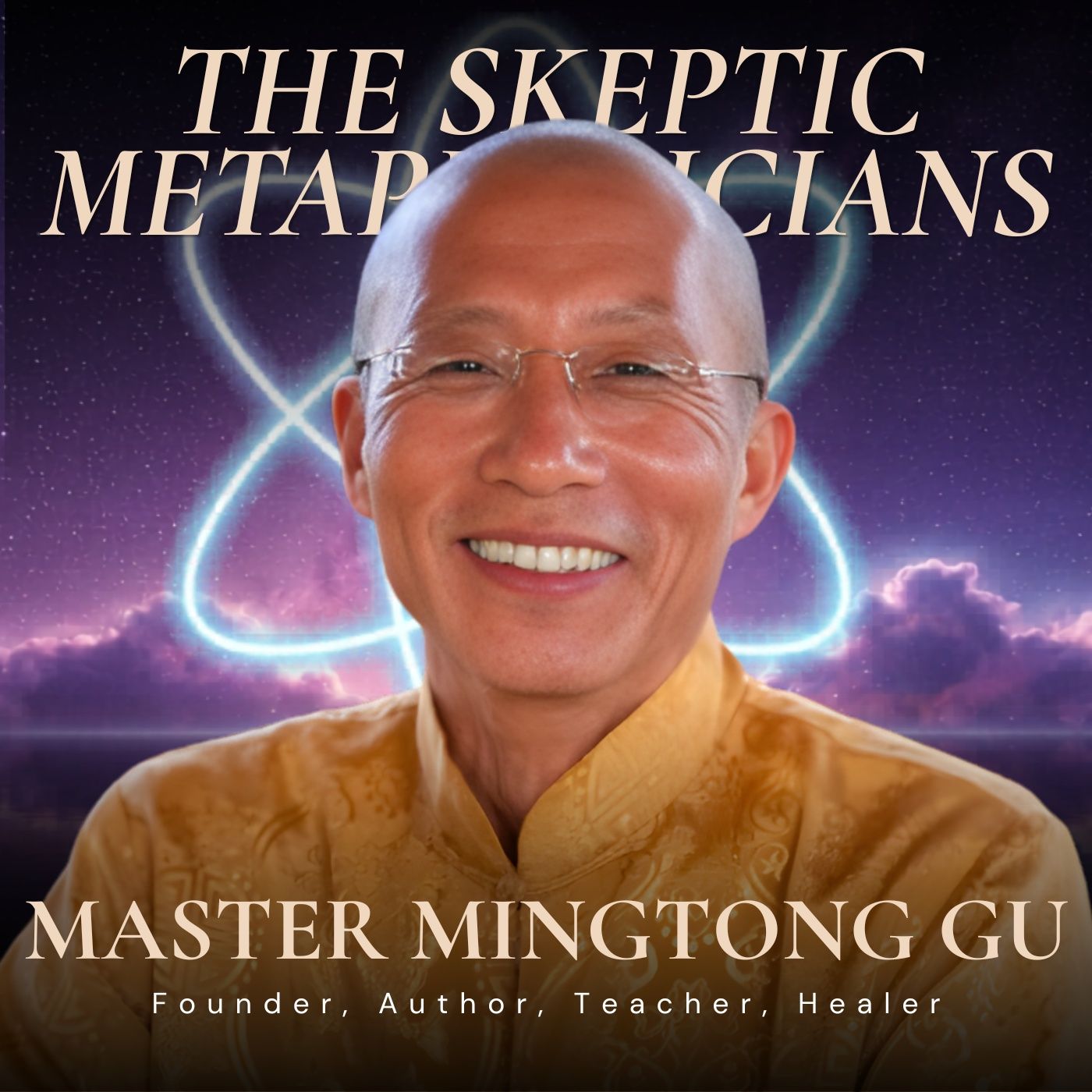
And when we sat down with Master Mingtong Gu, Qigong Master of the Year and founder of The Chi Center, what we thought was going to be a conversation about ancient breathing exercises turned into one of the most quietly mind-bending interviews we've ever recorded. We expected Eastern wellness philosophy. We didn't expect to walk away questioning everything we thought we knew about why we stay stuck, even after years of doing all the right spiritual things.
The Hospital That Shouldn't Have Existed
In 1988, a physician named Dr. Pang Ming opened the Huaxia Zhineng Qigong Center near Beijing. No medication. No special diet. No surgery. Just intensive Qigong practice, eight to ten hours a day. The center treated over 200,000 patients with various chronic and incurable diseases and achieved an overall effectiveness rate of 95%. At its peak, the numbers had grown to 5,000 residents at a time, with massive group healing practices as daily events, everyone participating, even those on stretchers or in wheelchairs.
The Chinese government found it valuable enough to recognize as a legitimate clinic. Then, in 2001, they shut it down. Not because it failed. While the government found Qigong very valuable for dramatically reducing healthcare costs, they were also wary of the large numbers of people gathering together, and outlawed group Qigong practice in numbers greater than one hundred.
So yes. A hospital that worked remarkably well was closed because too many people were healing together. We had the same eyebrow raise you're having right now.
"Incurable" Just Means They Don't Know How
Master Gu didn't just study this hospital. He trained there. And he arrived, as he told us, carrying his own so-called incurable conditions, including asthma and scoliosis he'd lived with since childhood. He healed. And in the process, he arrived at a reframe that genuinely stopped both of us mid-conversation.
"What they're saying," he told us, "is from what they know, they cannot help you. That doesn't mean the problem itself cannot be solved. That doesn't mean you yourself are incurable."
Think about that for a second. "Incurable" is a statement about the limits of one practitioner's toolkit. Not a verdict on you or your body. We've talked to a lot of guests about reclaiming personal power, but this one landed differently. It was specific. It was grounded. And it came from someone who had lived it.
Why Your Spiritual Practice Might Be Missing the Point
Here's where the conversation took a turn we genuinely didn't see coming.
Talking to Master Gu made us realize that so many of us, ourselves included, have been doing our spiritual work from the neck up. Meditation. Journaling. Affirmations. Mindset work. All of it valuable. But all of it happening above the shoulders, in the mental-constructed reality he described so vividly.
His core argument is both simple and slightly humbling: the gap between knowing something and actually living it doesn't live in your mind. It lives in your body. Stored stress, unprocessed emotion, and years of chronic contraction create a physical environment where healing, clarity, and genuine spiritual growth literally cannot take root, no matter how many books you read.
"Whatever you are feeling in this moment," he said, "is a result of your whole history of life."
Not your thoughts about your history. The felt residue of it, living in your cells.
The Two Patterns of Energy (And Why "Negative Energy" Is the Wrong Frame)
We also asked Master Gu about something our listeners bring up constantly: cord cutting, absorbing other people's energy, protection from negativity. His answer reframed the entire conversation.
He said there isn't really "positive" and "negative" energy. There are only two patterns.
Energy that is open, flowing, connected, and nourishing. And energy that is contracted, suppressed, and stressed.
That's it. The work isn't to banish bad energy. It's to gently, persistently return contracted energy to flow. Which means the emotions you've been trying to protect yourself from? They aren't the enemy. They're contracted energy asking to move.
The AI Angle Nobody Else Is Talking About
Master Gu's new book, Coming Home to Embodied Awakening, tackles something that felt almost urgently timed for this moment: what happens to human beings when we increasingly outsource our thinking to machines?
His answer was striking. He pointed out that AI can analyze, simulate, and describe every human experience in exquisite detail. But it cannot feel them. And why can it not feel them? "Only because I have this body as a human being. My whole experience exists because I have this body, not because I have a mind."
In an age where we're rapidly accelerating toward more abstraction, more screen time, and more cognitive offloading, the most radical act might simply be coming back into your body.
How to Start. Right Now.
Mid-episode, Master Gu led us, and you, through a short embodiment practice. Place your hands on your chest. And say, slowly, feeling each word:
Without this body, I do not exist as a human being. Without this body, I cannot experience life as a human being. Without this body, my soul cannot evolve in this lifetime.
It sounds simple. It felt anything but. Karen got quiet. Will stopped taking notes. Something in the room shifted.
Studies using Wisdom Healing Qigong protocols developed by Master Gu showed that participants in an 8-week class reported up to 83% improvement in well-being and global distress by the final weeks, with 58% reporting significant improvement. You don't have to travel to a sanctuary in New Mexico to begin. You can begin right here, with your hands on your chest.
The Big Picture
We've interviewed hundreds of guests across hundreds of episodes of The Skeptic Metaphysicians. The ones that stay with us longest aren't the ones who gave us the most elaborate cosmologies. They're the ones who pointed us back toward something we already had.
Master Mingtong Gu did exactly that. Not upward toward enlightenment, but inward. Toward the body that has been waiting, patiently, for you to finally let it into the conversation.
Your body isn't the obstacle to your spiritual growth. It's the doorway.
Listen to the full conversation with Master Mingtong Gu on The Skeptic Metaphysicians, wherever you get your podcasts. And if this episode moved you, share it with someone who's been doing the work but still feels stuck. That person needs this more than they know.
Loved this episode? Subscribe to The Skeptic Metaphysicians so you never miss a conversation that makes you rethink everything. Leave us a review while you're there. It genuinely helps more seekers find us.
Connect with Master Mingtong Gu and explore his programs at mingtonggu.com.
Florence Scovel Shinn The Game of Life: How a 1925 Text Sparked Modern Awakening