
 Apple Podcasts

 Goodpods

 iHeartRadio

 Spotify

 Amazon Music

 Pandora

 Castbox

 Overcast

 RSS Feed
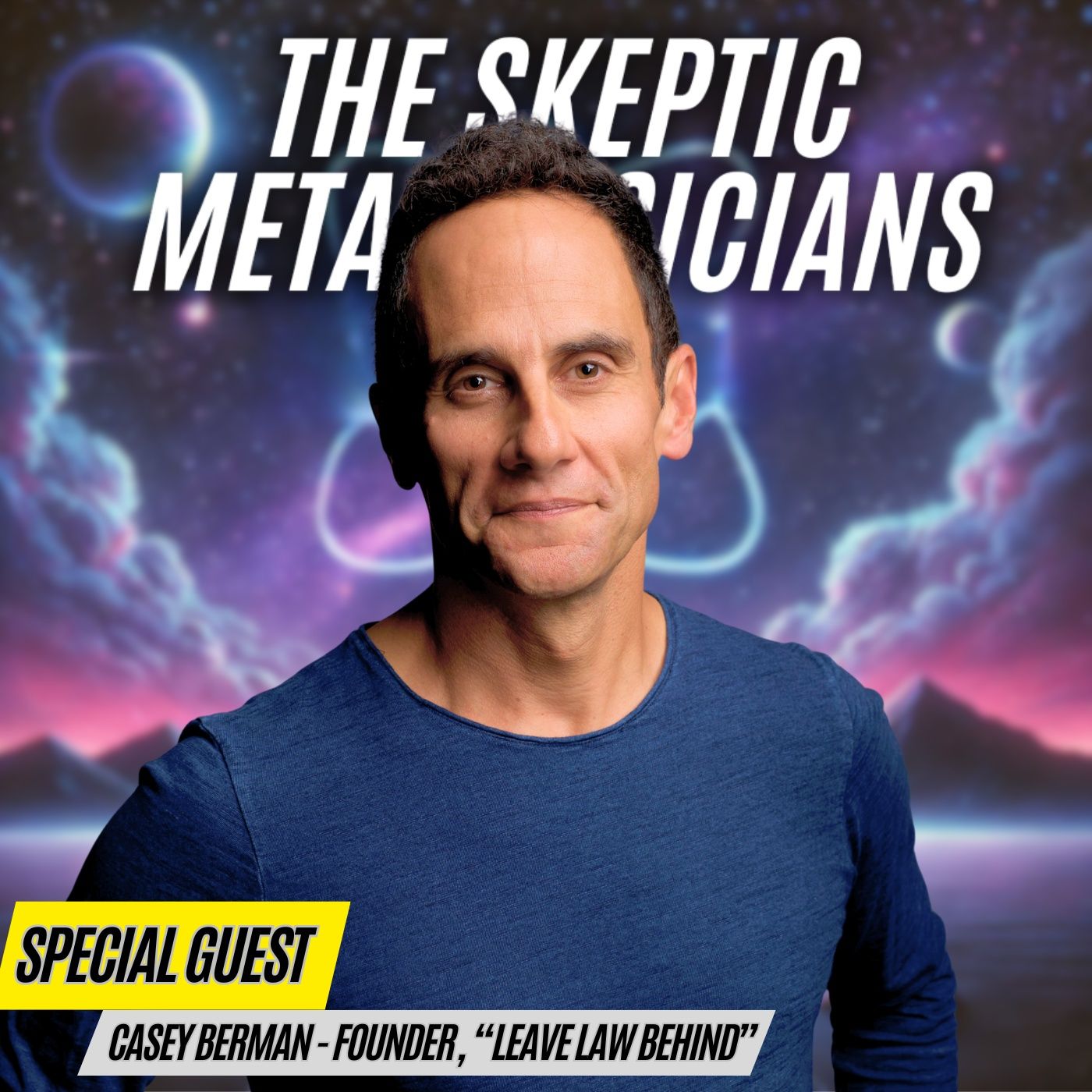
What if the stress, fear, and autopilot living so many of us experience isn’t “just life”… but a kind of invisible matrix we’ve been conditioned to accept?
In this episode of The Skeptic Metaphysicians, Will and Karen sit down with former attorney turned spiritual teacher Casey Berman, who walked away from a high-powered legal career after a profound awakening forced him to question success, identity, and what it actually means to live with consciousness and intention.
Rather than preaching escape fantasies or spiritual bypassing, Casey delivers a grounded, pragmatic approach to spiritual awakening and spiritual growth; one rooted in awareness, personal responsibility, and small, actionable steps. He shares how fear, societal conditioning, and identity traps keep us disconnected from our true nature, and how reconnecting with presence can quietly transform everything from career choices to parenting.
This conversation explores:
- How awakening often begins with subtle moments, not dramatic near-death experiences
- Why fear and anxiety are powerful signals, not personal failures
- The role of consciousness in dismantling stress, burnout, and misalignment
- How intuition development happens naturally when we unplug from constant noise
- Why soul purpose isn’t found, it’s remembered
- The difference between “escaping the matrix” and learning from it
If you’ve felt disconnected, uninspired, or quietly questioning the life you’re living, this episode offers a grounded reminder: awakening doesn’t require abandoning your world...it begins by seeing it clearly.
Key Topics Discussed
- Spiritual awakening without spiritual theatrics
- Consciousness as a tool for everyday life
- Fear, stress, and societal conditioning
- Intuition development through awareness
- Parenting after awakening
- Soul purpose vs. external success
- Living fully present in a distracted world
This is not a conversation about “escaping reality.” It’s about waking up inside it, and learning how to live with clarity, intention, and agency in a world designed to keep you distracted.
If you’ve been sensing there’s more, without wanting to abandon logic, responsibility, or common sense, this episode meets you exactly where you are.
Subscribe, Rate & Review!
If you found this episode enlightening, mind-expanding, or even just thought-provoking (see what we did there?), please take a moment to rate and review us. Your feedback helps us bring more transformative guests and topics your way!
Subscribe to The Skeptic Metaphysicians on your favorite podcast platform and YouTube for more deep dives into spiritual awakening, consciousness, spirituality, metaphysical science, and mind-body evolution.
Connect with Us:
🌎 Website – SkepticMetaphysician.com
📱 Follow Us on Social Media – https://www.facebook.com/SkepticMetaphysician | https://www.instagram.com/skepticmetaphysician
0:00 - Karen, yes. - Remember that movie? - Yes. - Which one? - What movie? - What movie? - You know how good my movie memory is. I never remember anyone. - Which is why I'm asking. - But you'll remember this one. - Okay. - Remember the movie The Matrix? - I do remember that. - Yeah, I thought you would know. Now what if we are all just extras in some kind of cosmic matrix? - Oh. - You know, working, stressing, doing laundry? - Well, shoot, then I'm gonna start slackin'. - That's not funny. - Well, but the thing is that we might be doing that, but then the real us is actually screening at us to wake up. - Oh. - What if that? - That sounds very frustrating.
0:40 - It does, right? - Yes. - It explains a lot, then, it doesn't it? Well, today's guest actually did wake up, right in the middle of a high powered locker-ear. - Oh. - He left the courtroom unplugged from fear and stress and discovered a path to peace and purpose it's actually practical. - All right. - So get ready, we're about to learn how to break free from the illusions of fear, lack, and separation without having to fight any agents. - Mr. Anderson. - That's good, 'cause I'm not that flexible. (laughing) - My name is Will. - And I'm Garrett. - And unlike Mulder and Scully, - Both wanna believe. - So we've embarked on a journey of discovery.
1:20 - We've talked to people deeply entrenched in the spiritual and metaphysical world. - We've thrown ourselves into weird and wonderful experiences. I even joined a covenant with you. - And, wait, you joined a covenant? - Yep, all in the interest of fighting something. - Anything. - That will prove that there's something beyond this physical - Three dimensional world we all live in. - This is the skeptic metaphys-- - The skeptic metaphys. (upbeat music) (upbeat music) - Hey there, I'm Will. - And I'm Garrett. - Welcome back to another Matrix Busting Fear Shattering - Soul liberating episode of the skeptic metaphysicians.
2:01 - That's very exciting. - I know, our guest today is a former attorney to her in spiritual matrix escape artist. See, after years of chasing external success, he woke up, ditched the fear-based grind and discovered how to live with clarity, peace and presence, and now he helps others break free from the matrix, stress, anxiety and societal conditioning to reconnect with their true selves, no red pill required. (laughing) - Welcome to the show, Casey Berman, how you doing today? - I'm doing great, thank you so much for having me. What a great introduction. I gotta write that down, I gotta start talking about myself that way, I love it.
2:41 - Yeah, it's very exciting. - You know what, we gotta start charging for the introduction, see, people could tell him, is it to like it, so, you know, we could be, like, full-- - Just introduce ourselves. - Yes, full, we'll just walk around with you, wherever you travel, we'll introduce you right before you walk in. - Those guys talk to them. (laughing) - We've got a new career path, Karen. - At restaurants. - Right. - In the park. - Hey! (laughing) - But, I'll come in on the bathroom. - In the restaurant, hey! (laughing) - All right, Casey, we just, but we're excited to talk about this conversation because that matrix thing is everywhere these days, right? - It is, and it's kind of creepy. - It is creepy. - It freaks me out, does it freak you out? - Well, it's not, we're not talking about living in a simulation here.
3:23 We're talking about like, living in fear and stress, not kind of stuff. You know, it's matrix-like. - Okay, I like that better. I mean, that's not good, but, (laughing) now I'm not afraid of you. - You can go there. I actually just saw the matrix on the airplane a few weeks ago. - Oh, you know, I remember someone years ago saying, really open my mind when someone said, "You know, the matrix is not a movie, it's a documentary." - Oh, I heard that, yeah. - I know, I can't, yeah, that really opened my eyes to the power of that film. - Right, so let's talk about waking up, right? The wake-up moment. You said that becoming a parent, when I researched you, you mentioned that becoming a parent really changed everything for you. So, take us back to that time in the late 30s, early 40s, when you suddenly said, "Whoa!"
4:08 - Yeah, in your late 30, not the late 30s, but in his late 30s and 40s. (laughing) The moment when you went, "Whoa, whoa!" - No, it's true, and I'm 51 now, and I did have my daughter in mid 30s and a son a few years after that. And I will, not law-related, but I will remember there was one moment, I was an avid reader of the newspaper my whole life. And I'm old enough to remember just the papers and would read it in the morning, and when it come in the afternoon in San Francisco, the Chronicle Examiner. And then I started ordering the New York Times, really enjoyed it, and I'll never forget that my daughter is in a high, maybe eight months, 10 months, I forget.
4:49 Now I forget, but she's in the high chair, we're at our home back in the day, and I'm reading the New York Times, and then the top right, it always says, "All the news that's fit to print." - Right. - And here I'm looking at the sweetest thing in the world, my little daughter, and then I'm looking at the New York Times. This is 2008, and it's, "Coo, murder, politics." There's not a bad, not a good thing at all on the front page, on the pot, you below, and I remember thinking, "Wait a minute, this is not all the news that's fit to print, as I'm looking at this new little angel next to me." And I canceled my subscription right then and there, called and said, "I'm done."
5:30 And so that was one of the moments when you have a family, not that necessarily, my daughter was this beacon of perfection, but just you start looking at things differently, and you start looking at things beliefs or comments or culture that you look at, all the news that's fit to print. Okay, I trust the New York Times. There you go, I just, I didn't, I didn't trust it as much anymore. And so having that family, having someone to provide for, someone to protect, but also children, you learn patience, you learn to moderate tone, you learn a lot. So that was one moment I remembered that kind of just pulled me out of, momentarily, a lot of the beliefs that I had, and then what I was happy with is actually acted on it in this matrix.
6:12 I actually canceled it, which was hard for me to do, because it was a real routine for me. But that was one moment where fatherhood really kind of put me on more of that spiritual journey. - Right, and we've talked a lot on the show about putting down the phone, moving away from media, disconnecting, being in the present moment, and enjoying the time that you have with your friends, your family, at the moment that you're having. - Mm-hmm. - There is, not to place the blame completely on the media, because it's coming at us from all different sides. I mean, social media even has the word media in it, right? 'Cause it's coming from at us from all over the place. So how does someone actually take the leap and say, "I'm unplugging this thing from the back of my head and waking up to what life is actually about?"
7:02 How does someone do that? - You know, I'll answer that, and a story came to mind. I was reading years ago, and there was an artist in France, and out of somewhere in Europe, and this woman, and, you know, beautiful garden, and they asked her what her favorite TV show was, and she said, "Why don't watch TV? "I don't wanna watch other people's lives. "I wanna live mine." And that always, always wrong with me, and I'm not saying you never watch TV. I'm a big sports fan. I love watching sports, but it really spurred me to kind of create my own, as opposed to just consuming, create my own. But one thing to really take that leap, and, you know, and pull that plug, is that it's not a leap at all. It's a baby step.
7:42 And this is what we tell, you know, we help attorneys to leave the lawyer practice, and move into non-law careers. They love, they're good at, they're, pays them well, and so on. And that is one of the major issues they have is, "Oh my God, I have to quit my job now, "and what if the job doesn't work out?" And I'm saying, "You don't have to do anything right now." I'm asking you to take a baby step, a baby step might be signing up at our website. A baby step might be just going to admit there's a fear or a blocker. A baby step might be an informational interview, where you reach out to your nephew who works at Netflix and knows someone in the entertainment, and you literally go get coffee virtually, you're in person with the nephew, no one knows anything, you're not doing anything, you're not burning any bridges.
8:25 And so it's really a baby step. And I can get into specific baby steps if you want, but the first thing I really like to get across is that, no giant leap is needed here. Small, iterative, gradual steps is really, and confidence, I'm confident and then I act. So flip, it's I act with a little smidge in a confidence, but I act and then the confidence grows. And that's really what the dynamic is. - Well I'm glad you brought that up. - I got it. - Because, and I do want to talk more specifically about the little steps that we can take, but you didn't take a baby step. - Yeah. - You were, you had a legal career that you just said, nope, and dropped it, and you took a baby step, not a baby step.
9:13 - Yeah. - How did you, what made you do that? - Yeah, so as a little context, I always, you know, back I'm graduated college in 96, and graduated law school in '99, went straight into law school. I didn't, I wasn't a doctor, I was just, I talked well, so I love stories, so just go to law school. And back then, I talk about opportunity cost, there was this little company called Google, and Yahoo, down the road in Silicon Valley, I didn't even think about, right? Like, what if I had gone? So, and then went to law school, I got a good job, and then a great job in house council. I had the job everyone wanted from '01 to '05, but my friend always says, he says, you know, the best way to get Casey to leave your company is to promote him.
9:57 And what he meant by that is, I don't, I don't want the corporate trappings. I'm a people, please, or I was more back then, so I was really, really good at the corporate ladder, and so on, and I could do a good job there, but just something, there was something inside of me. And so, but what happened in '04 or '05 when I left was, and I did, I, I leaped, and I remember my mom walking into my condo at the time in San Francisco, my little apartment, and she put a, she was nervous for me, of course, my mom had died, but she put a magnet that said, you know, leap in the net will appear, and I said, well, if my mom's okay with this, but I, I made a calculator, I've got money in the bank, but I just, I just, I left, I left in house council, I did software licensing, it was a dot com, it was a profitable company.
10:41 - There was a pitch job. - Pitch job, a lot of money, I had the, you know, becoming general council in Silicon Valley path, but, you know, I was, I was like this every morning, I was negotiating agreements, I was, it was stressful, I had sales people, it was great, I loved the job, don't get me wrong, I absolutely loved this job, it was great, taught me a ton, over time though, I just wasn't aligned with it any more, and I just had to listen to that, because I knew, I'd be doing it, over time I'd be doing it for the money, I'd be doing it for the stature, I'd be doing it to, to please people, and so, yeah, before I got married in '04, I quit, had some money saved up, and I said, I'm gonna, I'm gonna figure this out, and I definitely had a lot of bumps and bruises, don't get me wrong, but that's, it's kind of my, just my personality, so, and I had a good support, my fiance, my now wife was very supportive of my family, and so I had support around me, but, but yeah, it wasn't, it wasn't easy at all, but it sort of felt to me like, to the point of the matrix, I was, there was just this voice, I was just listening to it, just I couldn't not do it.
11:40 - Right, right. - Well, what's interesting to me is how difficult it can be, I guess, to stay unplugged, because it's easy to fall back into those routines, and I was speaking to someone today, who told me about a friend of hers, who had had cancer, and she had had a double mastectomy, and survived, and she was fine, it had been several years, cancer-free, and they were having a conversation, and she actually said, you know, I missed the time I had cancer, and my friend's like, why? And she said, because that's when I paid attention to life, that's when I noticed things, that's when I was present. And so she had this wake up call, this unplugging, but I guess, you know, life got in the way, or I don't know, but she kind of went back into it, so, so how do you do that?
12:22 How do you stay unplugged when it's so easy to fall back into that trap? - Yeah, so I don't stay unplugged, but I recognize, when I'm plugged in, I recognize that I'm plugged in. I try to, that, okay, I am plugged in, and there are moments where I don't recognize I'm plugged in, but one way, I think Michael Singer talks about this, where he talks about how, you know, if we were to have all of our five cents, right now, if you watch a movie, James Bond, we hear what he hears, we see what he sees, but we still know we're Casey in the audience. Now, if we had, if we tasted what he tasted, if we felt what he felt, if we thought the five senses, plus thoughts and emotions, if we had all of those experiences of James Bond, we wouldn't be ourselves anymore, we'd be James Bond.
13:07 And the issue is we are playing the role of Casey Berman, and I think I'm Casey Berman because I experience this matrix reality, construction world, whatever you wanna call it through my five senses, which by the way, are all coming in, you know, you don't taste the out, you taste in, right? You don't hear out, you hear, and then I have thoughts and emotions. So those seven ways of sensing things is me in this movie. So when I can pull out of that meditation, quieting the thoughts, pulling out and kinda look at myself, which is so hard to do, but when I can do that, then I am observing my own movie, in the same way I'm looking at James Bond on the screen.
13:51 So there's two ways I do it. One, when I'm plugged in, I try my best to say, okay, I'm plugged in. The other way is to actually unplug by finding one of those seven, usually the thoughts, one of those seven to kinda collapse that one, that thought. And so when I do that, it's a bit of an escape valve for eight seconds, 10 seconds. And I'm able to look at myself as that impartial observer. It's very difficult, I forget to do it, 'cause it's so fun to be angry, is it? (laughing) Yeah, well, I've got a, I've got a, Eckhart Tolly talks about the fear body, sorry, the pain body, and it makes a lot of sense, and we're going to dive into that at some point in the future.
14:35 However, I hope that makes sense though, but that's kinda how I'm plugged in. - Absolutely, yeah. And I really appreciate your perspective, 'cause some people are like, well, just, once you're unplugged, it's just easy. You're in this bliss, so I'm like, okay, and here's our real guy, telling us a real experience that I think we can all understand and relate to. - Right, so the key to what you said earlier, the key to what you said to me was, you were no longer aligned with what you were doing. And I think that is such the crux of this conversation, because I think more and more people are feeling misaligned with what they're doing, but they feel like they got to go and get handcuffs on, they feel it's impossible for them to get out of what they're doing.
15:19 So this brings me now to, if you feel misaligned, if people walking around in complete autopilot, a lot of us are, let's talk about these baby steps. How do we get out of the matrix? Give me some examples of what specifically someone can do. - No, I'll lay out our process now, so grab an old-school pen and paper if you want. You know, we're going a little touchy-feely. (laughing) - I'm ready, I've got my paper and my pen. - Go, go. No, but for everyone listening, happy to take it through, I want this to be as actionable as possible. And, you know, I go this route, but as you can tell, I'm a type A, I deal with lawyers who don't put up with any of this and, you know, just action, action, action.
16:00 And so I try to find that way of showing how getting into the zone, I'm a sports fan, who are more tough than sports stars, right? But you see the most successful ones, Tom Brady talked about a lot, you just get in the zone. You're not even thinking, you're just feeling, it is, is it feel? So, the process really is, the first step really, baby step, is to overcome or mitigate or move forward not with standing of your fears. So recognize blockers, recognize, oh, I'm not afraid of anything, know you are. (laughing) - Yeah, I'll get you some.
16:41 - Conscious, they're subcont, golden handcuffs, I'll never make money out of the law or in another job. This is the best I'll do, my parents will be disappointed. It'll take so long, big fears, small fears, however you classify them, but the first step really is just to settle, just to observe what's getting in the way. What's the blocker, the fear, the doubt as you mentioned. That's really the first step. Kind of step one point, one to be or step two is around identity, a lot of lawyers have this. So this could be a blocker, you can separate it all, also, but what is, how is my identity tie? So the James Bond, Casey Berman, I'm not really Casey Berman here, I mean, quantum physicists have said, like this doesn't exist, I believe my bones in the concrete exists, but it really, really doesn't.
17:28 When it comes to the physics of it all, but I'm in here, I'm plugged in, I'm gonna believe that this hand exists, okay. I believe there's an identity of Casey Berman, I'm a lawyer, I have my glasses, I wear glasses, I'm smart, I'm manly, whatever your identity is, looking at your identity, because particularly from unplugging from a career from that auto zone, some of the time reasons were in that auto way is because we think our identity is tied to it. Well, I'm miserable as an attorney, but I love telling people that a cocktail party, I'm a lawyer. First of all, you don't go to cocktail parties anymore, you're working every weekend, but there's that identity, right? So, and even non-law, just anyone, I'm a podcast host, I'm a this, I'm a creator, whatever it is, I didn't.
18:14 Okay. The third step, I hope I'm not going too fast, but the third step is very important. Now, this is, once you kinda get the blockers and what's going on here, what's the framework, what's the environment, the sandbox, if you will, what am I good at? This is what we call your unique genus, your skills and strengths and enjoyments, and we do an audit, them, there's three questions, I'll say it slowly, ask your network, what am I good at, compliment me? Second, what advice do you come to me for? Size Legal Advice or Accounting Advice or whatever. And third, what have I done or what do I do for free? Those get to what you enjoy, what you're good at, and how you add value. Gather all of these traits.
18:54 You know, Casey, you plan parties well, you're the one with the good music, you're the one who puts IKEA tables together, you're the one that's always great at conversation, you listen while you're empathetic, you're great, stored, whatever they say about you. Okay. You gather at all and we do this and leave a lot behind, but we have like buckets, you just kind of organize it. And it's kind of qualitative, but interpersonal or schmoozer, or I'm the more behind the scenes, how do you want to organize it? Now you have sort of this skeleton of where your skills and strengths fall. If you have no skills and strengths under schmoozer network or guess what, you're not going to go into sales. If your skills and strengths are under your traffic controller, adult in the room, okay, let's look at compliance, looks look at trust and safety.
19:38 And so then what we do then, there are a lot of jobs that fall in these buckets. So the method of the madness is just to see your skills and strengths, how you've organized them. And that's how we organize it, you can organize it any way you want. And then match jobs that are calling for those skills and strengths. So I often say a job, if you remember Casper, the friendly ghost, the only way to see that paranormal phenomena is to throw a sheet over it, to throw sand on it, or dust or something. Well, that's all a job is because your skills and strengths are invisible. Do we really see detail oriented? No, no, no, we see the results of it. But I don't see it, I don't taste it. People, but jobs are that sheet or that sand that give form to your invisible skills and strengths.
20:24 Right? So you do this audit of your skills and strengths. There's a few more steps that will stop there in case you have any questions about that. Yeah, no, I've just statement that I, I've been taking strength assessment tests and personality assessment and all, trying to figure out where do I fit in. Never once did I consider asking my network. (laughs) Yeah. Those questions. Three, five, seven people, that's it. Wow, that's amazing. I hadn't thought of that at all. Now I know what I'm gonna do tomorrow. I have the script, I have the script, I can send, I can post it for you, you know, the script you can use. Some will say, thank you, by the way, some will say, oh, you know, touchy feeling, I don't want, okay, fine, don't, don't, do most people, if not all will say, I am honored.
21:12 I'm more than happy to give this to you. Oh, that's very cool. So if you're listening right now and you would like to give me some feedback, now they probably don't know me well enough, right? Oh, yeah. No. Just a thought, anyway. 'Cause I don't have a lot of friends, so I just figured, you know, people would listen. I have friends, oh my gosh. I could do a quick, you need genius analysis on you. If you'd want, you know, you, you, the banter, you're very quick, right? You're a storyteller, you're very quick, you think quickly, extremely empathetic. I assume I'm just meeting you now, but extremely empathetic. Probably you can do the details if you needed to, but I don't know if detail oriented is, is like what you should be, the tip of the spear, if you will.
21:52 So I could go on and on, but these are some that I'm just picking up. - Wow. - Right? - Yeah. - I don't know if they're, if I fit, but maybe, but like that being an example where someone you know would say, boom, boom, boom, and list all of that out, the good thing is some of it, you're gonna nod your head and go, oh, I knew that. I knew that. One, that confirms it, makes you more confident, but two, there will be new things they'll tell you that you didn't know you were good at, you know what I'm saying? - Like your blind spot, right? I had no idea I was good with chickens. (laughing) - So good at random. - Those factory friends. - As long as I grease pigs, I'm good. (laughing) - So we, okay, so let me take the next two steps real quickly.
22:33 (bell rings) - We need to take a quick pause, but would you write back what it looked at these messages? And now back to the show. (bell rings) - All right, let's do it. - So you overcome your fears, find out what you're really good at, scouting your port for any sports fans out there. Okay, then what you do is, like we said, you find the jobs that align with it. Okay, so a sales job calls Schemoozer thing. If it's, we have a bunch of jobs, I'm happy to send more info, but you find jobs that align with the call for your skills and strengths, 'cause remember a job, a job description is really just a call for help. We need help, we have a pain, we have a gap. And then finally you get out there and you network. Now, before I say the networking word, which I know everyone, I'm not saying go talk to everybody at the golf club in Schemoozer.
23:16 It's real, now that you've done the unigeness work, and you've identified the job or jobs, two or three jobs that you're a fit for, that you had value for, it's very focused networking. That's who you network with. People who are in those roles, adjacent to those roles, and you can apply online, but let's be honest, you're not gonna find many jobs on a job board. You then reach out and do informational interviews or coffee chats. Hey, well, I know you do such and such, or your nephew does such and such. Can I take 20 minutes, just kind of ask, and you keep doing these conversations, you got your spiel down, your tight, you've done an auto skill, the straights, you present very well, and finally someone is gonna say, you know what, I'm saying, "Semoo you're resume."
23:59 We don't have a job opening, but we might, let me get you into our system. Three months later, you're creating the job description with them, I see it happen all the time, so. - Well, well. - I pause there, but those are really the baby steps that you can take to kind of unplug out of a career that you don't like, and really start moving actionably, realistically, into something, just can take three, six months. I mean, if you really wanna do this, be careful what you ask for, it may happen, so. - See, I love this though, because it's like you said, you don't have to just, like, cut the cord, you know, because a lot of people don't have money saved up, you know, they're working, you know, they're living paycheck to paycheck, and so this is an easy way for them to start without jeopardizing their current situations, still being able to pay the rent, feed the kids and all of that.
24:41 - And do stuff as much more aligned with what they wanna do, or the thing that they wanna call. - Yeah, that's fantastic, thank you. - That's a big money. We talk about money, we have a home module about money, we talk, we're very open up money, I always say, I never want you to trade a job, you have anxiety about for the anxiety of not being able to pay your bills. Don't make that trade. Keep that job you don't like to keep that money coming in and just do this on the side. Even with people who have little time, it is possible. - Yeah, that's great, that's really great. - So, how do people know? 'Cause there are some smells like running around out there. Some people might be in the room.
25:21 - Except for you don't run. - Oh, dang. (laughing) - I run, I just run. - You're walking around out there, I just run funny, that's all. - My nose runs all the time. - Oh, ew. - So, there are a lot of people out there who maybe, they're feeling like, blase, they're on autopilot, they don't know, truly that something's not aligned. How does someone identify the fact that they need to make a move? - If they're feeling blase, that's a good indicator. But I think, I guess what you're saying is, if they're not in tune, how will they hear that signal?
26:01 - Yeah, you are. - How will they, yeah. Many don't, many don't, and hopefully they stumble across your podcast. Hopefully they, I will tell you what hit me. And I would just tell folks that even if you're blase or just in a slumber and so on, you're not awake yet, I get it, we've all been there. One real quick story about how it hit me. I was feeling a little disgruntled with things and then we had an all hands meeting. I was in San Francisco, we had our headquarters was in London and flew there. They had a bunch of people, everyone meeting each other and they put, our name tags and they had our department on there. And I was in House Council and VP of Operations. And I was under the admin group.
26:41 Now, no knock on anyone who does administration or admin, it just wasn't for me. And when I saw the words admin, administration, is that what I did, I said, oh, that got me. And because I knew that I wasn't aligned with that. For me, I wanted to be in front of the customers, I wanted to be listening to people I wanted to speak, I wanted to be creating something. And again, no knock on admin operations, that's needed, it definitely just wasn't for me. And so I got great teaching and operations, I got that great grounding, great role. But at that point, it took me about nine months later before I left, but at that point, I was listening as much as I was just kind of in a stupor, when I saw that on my name, it woke me up.
27:30 So sometimes be open to the smallest things that can get you out of that blasey vibe. - So then what would you, so talk about the blasey vibe, you know, it's not terrible, it's not great, man, it's easy. I'm in this rut, I'm fine. What would you say to someone, like, what's the best thing that has happened for you or the feeling that you've had since you've gotten unplugged? Like, what would make it worth it to someone to make the effort if they're just like coasting along and they don't really care? - So this is gonna sound weird, but the most, the best thing that has happened to me is personal responsibility.
28:13 And what I mean by that is I learned this that every, the flip side of a right is responsibility. So we have a right to free speech, but you can't say it in a crowded, can't yell fire in a crowded theater, right? That's obviously useful. But we have a right to entrepreneurship and hustle and leaving all and doing what you wanna do, the responsibility is work, get up in the morning and do it. We have a right to do a podcast, but the responsibility is all the work that for instance you two, but do behind the scenes at none of a see, right? And so there's that responsibility that goes with it and it is nerve wrecking, it's scary. I mean, I had passed week or two or three, I have had some very unmotivated times and I am just what's going on with me, you know?
28:58 And just, and I've had to get out of it by literally writing this small email or something and it led me to working late in the evening, which is fine, but you know, I'm getting done at 8.30 pm when I should have been done at 3.30 pm because I just, I just, so it's that responsibility aspect, that I know sounds crazy and a lot of people don't want responsibility, but it's just so, it's so empowering for me. Now I think at, in a much less dramatic way, I think what's great for me is that I, there's a freedom about it. I have a lot of work to do, don't get me wrong, but there's a freedom about how I create my day and I have to get up early, the kids school, get them out and so on, so it's not, like I'm sleeping until noon every day, but there's just a freedom to it.
29:47 If I want to, I take off. I block off my Fridays. I block off from this. I do somewhere, but I just block off. So it's these little day-to-day things. One last thing I play baseball here, believe it or not, I'm way too old for this, but there's a league here or a men's league, we have uniforms and everything. - Oh, so jealous. I'm so jealous. - My wife always says, don't hurt yourself, you know? One guy said to me, he's like, come on down, we're doing some practice. I was like, I can't, I'll be, I can't make it, you know, I have something and he says, Casey, you don't have a job. You don't work, come on, you know. - Oh. - But I took it as a compliment, because they don't even know what I do. - Right. - I create content, I'm on a phone, I work in my house somewhere, like, what does this guy even do?
30:28 So one of the cool things is having people and what do you do? I can't even comprehend, get my arms around it. So those are some of the perks or some of the things I enjoy after having, after I've unplugged into a certain extent. - I think that freedom is really attractive to a lot of people. - No questions. So that brings me to my next point, man, next question. What if your, what you're being called to do, what you're more lined with is not a job, but rather it is a, to be a digital nomad or to travel around the world and help people with their spiritual awakening. So whatever it is, how does someone move into that space?
31:09 If that's what they're being called to do? - So there's a few things to think about. Remember, unique genius, what are your skills and strengths? Because people will say, what should I do? And they'll say, you know, I wanna go into media. I wanna be a digital nomad. Okay, that's not what you're doing. That's the sandbox you're playing in. That's the industry you're in. So the first thing is, if you're gonna be a digital nomad or you're gonna be a coach, again, what are your skills and strengths? What are, I always go back to that because if you wanna be a digital nomad, but you're not good at, I mean, digital nomad could be anything, could be a coach, could be a copywriter, could be anything. So what are your skills and strengths?
31:49 That's the first step. But if they do wanna go be a digital nomad, then to do that is to physically break free from a lot of the confines of the subway and going into an office building and all of that. And then just learning what you're the new routine. And I've had to do that. I mean, I've had to scramble again and get a connection in Italy and in the Middle East and places and see, that's pretty bad ass. - Yeah, I don't feel sorry for you. - No, no, no, no, that's pretty bad ass. So, yeah, yeah, yeah. So the answer is about how do they do it? It's, again, baby steps, go talk to people who are doing it, start it on the side, leave all behind with start on the side, while I had a W2 paycheck.
32:36 So start it on the side, start building it. I will always say, something should remain a hobby. - Should remain a hobby. - Right, not everything needs to be a job. - Thus my baseball playing. - Yeah. (laughing) - I bet at the bottom of the order, I'm just having fun. So, but yeah, there's just so many ways, opportunity, I think what it really takes is that energy. I mean, I was, leave all behind, I was writing blog posts at 11 o'clock at night. You have to, there is a little bit of that hustle and get it going, not forever, but you have to, you gotta put the fingers on the keyboard sometimes, and get it done. - And what if someone doesn't wanna work at all? (laughing) Is there a plan for that?
33:18 - That's a whole different lifestyle, but yeah. - It is, I guess that bridge is pretty comfy, right? - It is. - Now, being a lawyer here depends how you define work, right? So if someone doesn't wanna work in the traditional sense, being told what to do, being for profit, for shareholders, yeah, I get it. But if someone wants to create, kind of have their own vibe with Chachibit, now you've got your own assistant, some people won't view that as work, right? What will happen then is, okay, great, I can do all this, what happens then is, then the imposter syndrome, who am I to have my own podcast? Who am I to have my own blog? Who am I to become a coach, right?
33:59 Then a lot of that can come, and that can block you. - Right. Do you believe that we as a society, as a whole are waking up to these kinds of messages, or is it just specific people? - I do believe that we as a society, macro and micro, I think that the internet, obviously, has been a phenomenal way to do it, because back in the day, you were listening to Tony Robbins, DVDs, or, you know, by books, Napoleon Hill, and things along those lines, I mean, the way that we can distribute through the internet is obvious how much scale there is. I think that if we were to doubt people were waking up, it's because of the media, because of the extremes, get all of the headlines.
34:48 I mean, if you look at drug report, one of the top visited websites, look at all of those headlines, it is extreme, it is new sum Trump, it is whatever spectrum you're on, they are always choosing the extremes, and the 80% 85, 87% of us who are moderate, who want to care for our families, who want to take care, who let people pass in traffic, all of us, I think, are waking up, and we are not going necessarily to some divisive YouTube channel or TikTok channel, but rather we're listening to this podcast. We're listening to someone with a law of attraction on Instagram or whatever, a lot of people are doing it, and so I do, it's just not reflected on a lot of, you don't see ABC, or CNN, saying the main headline is not, people who just met each other had a fun and nice conversation.
35:40 You don't see that. - Right, right. So then I would addend your steps, your baby steps, to say that the very first step is put the damn phone away. - Yes. - Put the phone down, stop looking, strolling through, doom scrolling through the social media accounts, stop reading the headlines, and I actually turned off my notifications for my social media, because every time I was so programmed, every time I phoned, ding, what's happening here? Ding, now I'm still doing it, 'cause now I'm getting headline news, beam that me, so that's the next thing I'm gonna do, is I'm gonna turn off notifications on that stuff, but the very first step, put the damn phone down, second step, turn off your TV, or at least if you're gonna watch TV, watch something like new reality TV, which is like, stop that will feed your soul, not shameless plug, right?
36:32 - No, not at all. - Not a shameless plug at all, but something that's going to feed your soul, not eat your soul, right? 'Cause that's exactly what's happening, because we talk about all the time in a show, and when we talk to people, the media is actually feeding off of that energy. How many clickbaits do you see that this sensational headline that says, you can't miss it, you're not gonna believe, oh, I'm, yeah, and then you get more clicks, and then the advertisers are on advertised, 'cause now you're gonna make money for getting the clicks, so you're putting more of the scandalous stuff. - Right, and we are a program to respond to that kind of stuff, right? - Yeah. - I used to work in news, and the old cliché slogan, if it bleeds leads, right?
37:15 So we totally, it's only gotten worse. So first step, put the phone down, second step, turn off the news, and-- - Put the phone down unless you need the GPS, because who knows where I'll end up? (laughing) - I need that, for the GPS. Fair point, fair point, sorry. But I guess we can get you a little separate GPS devices. - Just like the little garments that come out, like for the whatever, 2000. - That's right. One thing that I would wear would keep the phone, turn off the notifications, but one exercise that I love doing is when I walk my dog, is I do voice to text in my phone, and that's one way I can write or create, and my kids roll their eyes, voice to text, such an old thing, but when I get my fingers on the keyboard, now I'm concerned about typos and periods, and I don't type that well anyway.
38:00 When I go talk, email myself or do a Google doc or whatever, and I'm just sitting there with my headset on, just stream of consciousness, and ideas come out and flowing, whether it's something personal, how you feel about something, or for work. So just a thought that that's one way that I do, just a real actionable way to become a creator. - Right, so basically you're using the phone as a tool to help you versus-- - Much better than my voice to text. - You know. - That's true. - I've told people were getting divorced, and not checked it and sent it. I had a proposition to friends, husband, once, and then I was like, "Oh my God, what did I send?" 'Cause it auto-corrects, and I don't check it.
38:40 It's terrible, but yes, I mean, it has the skills. - A Google doc not in a live text. - Okay, see, that's smart. - All right, so open up Google Docs, and then talk, don't talk. - Or I could just stop. - I just need to go back to calling people. - Well, back to chat, GBT, right? You can always just open up chat GBT and have a conversation with chat GBT, and it'll talk back. - It'll talk back. - And it'll be like a sounding board. - That's right. - And I'll say, "Why'd you leave your husband?" And I'll say, "No, I went to the store." That's a horse. (laughing) - Looking up listings for Casey Birmingham Attorney, Attorney, you said you were going to be a cop. (laughing) - So let's talk about what it is that when you talk, you said a couple of times during this conversation that you have, you help people in this, you help people in that.
39:25 How is it that you help people? - So leave law, if someone goes and add a leave law behind.com, a lot of free resources there, you can check it out. And this is, this was a blog I started back in 2009, just getting my ideas out there, turned it public, Google picked up on it, and taken off from there. And so we help unhappy attorneys to do what we've talked about, to really understand what they're good at, their transferable skills, many of them say, "I could just have lawyer skills." What else could I do? So we help them understand that and find roles. We've helped hundreds, I think almost a thousand unhappy attorneys to move to non-look, sales, operations, recruiting, compliance, you name it.
40:06 And so just really helping them, and they love their jobs. They just absolutely, they pinch themselves. So, and then I'm also started kcberman.com, which had a lot of hesitation. I've had to really push to do this, who am I, right? But I had people ask me, I know I'm not a lawyer, can you help me? And so I've started there to help non-lawyers, and I'm starting to write there about these type of things as well for non-lawyers. But those are the two areas where I help, and how I help people. So then these websites, would you say they are, I mean, they sound like a fantastic business, would you say they're more kind of led by your desire to be an entrepreneur and have these businesses, or is there a spiritual component to why you're doing this?
40:47 It's, no, it's a great question. And I think it was a spiritual component before I even knew really what spiritual was, right? I was just writing, I just wanted, I was using blogger at the time, or WordPress.com at the time, and I just started just getting my thoughts on, I don't even know what compelled me to do it. I said, you know, I just wanna write about what I'm doing, which was at that point, I was a few years out of being a lawyer. And so I just started writing, and I just kinda did it for myself. And, you know, at that point, I'm actually creating a new web page for leave-all-behinds, and some marketing material, and I'm thinking, like, wait a minute, where am I coming from? Am I coming from a business marketing standpoint, just get this done, or is this coming from me?
41:30 Like, where am I coming from? And I had to take a pause, 'cause I was like, I want this done by next Friday, and no, it's gonna take a little longer. I need to sit with it. So I do lose myself, I get plugged in too much, but both businesses have a very spiritual kind of, this is just what I wanna share type of vibe with it. So thanks for asking me. I gotta ask the question just out of curiosity. - Sure. - You're a parent. How has this awakening changed the way that you parent your kids? - Yeah, that's a great question. So, you know, my daughter is 18 now, and she has a gift for Gab, and enjoy storytelling and talking and presents well, and she's in a creative media class where they're filming, and she was talking about how good she was at this, and I'm beaming as a, we're driving, and I'm just beaming as a father.
42:20 And she said, well, I said, "God, this is a gift you have." She's like, "Yeah, I'm good at it." But, you know, Mommy is very empathetic and understanding, and I listen from the other room on a lot of your coaching calls. - Ooh. - And so, I didn't really realize that. She's down the high, I didn't know where she was, and she's heard me do a lot of my talking over the years. And so, it's one, I didn't realize it at the time, but doing these businesses has really rubbed off on my kids in that way, and help them either see what they're good at, or emulate that, or also, I think, they've understood the entrepreneurial need nowadays, particularly with AI, we're hearing all these headlines about entry-level jobs are going by the wayside.
43:07 So, I've really said, my children, I don't want you to worry about jobs just yet, but let's create your own thing. Use AI, don't get made redundant by AI. So, and also, I think I've seen with my kids that there's a patient's level with a very just distraught and tired and fearful 48-year-old attorney, in some ways has the same fears as my eight-year-old, and just having that level of patience, having that level of sympathy, empathy, compassion, but also a little bit of a push. I've seen those themes come up, not that 48-year-olds like an eight-year-old, but just similar types of responses from my side, I've realized that I've needed to respond similarly in both situations from more of that empathetic standpoint.
43:58 - Okay, very cool. - Well, there's that core humanity that we all have, you know, it makes us, that's the best. - Most of us, core humanity. That's a better way of putting it in, core humanity. - All right, well, we're gonna make sure we add those links to our show notes, so if someone wants to reach out to you and either leave law or Kasey Berman, you can help them to find their way out of the matrix. I'm sure that a lot of people are gonna appreciate that. - That's seven minutes, about it. - Is there anything else you wanna make sure that we talk about or we touch on before we say goodbye? - I just wanna say thank you for all you do, and just, you know, I've been a fan and just listening to you, I learned something after I listened to every podcast, I listened when I go on my dog walks, when I'm not creating my own stuff, I'm listening to yours, but no, thank you so much for what you're doing, and I just think it's so important for people to, and put it this way.
44:53 What I've heard is that you can either view this matrix or whatever as a prison or as a classroom, and a good classroom, not the horrible classrooms people may have had back in the days. - It's a sum of good ones. - The enrullers and knuckles, yeah. - Yeah, exactly, not those. But just like, what am I gonna learn? So such and such didn't happen, what am I gonna learn from it? What am I gonna learn from it in this matrix? Also, what am I gonna learn if I can kind of unplug? And so that's really helped me understand that good and bad are just constructs. It's just how we view things. So I just am really appreciative that you're, you're kind of just keeping this at the forefront, this type of exercise and discussion. So thank you. - Well, we appreciate you saying that, and I definitely need to clarify to the audience we did not prompt him to the dissuade.
45:34 - This is not why I asked him that question. - So I should put down this paper. - Yeah, it's shit. - I didn't, I didn't really, I don't think I had anything much more insightful to say. So I just wanted to express my gratitude. - And yet that little gem at the end was perfect. It was wonderful. - I think that was very insightful. - Yeah, that was. (laughing) - All right, Casey, thank you so much for being on the show. This has been wonderful. - And for what you're doing, it's just fantastic. And I know you're gonna help so many more people. - Definitely. - Well, I appreciate it. Thanks for having me. (bell rings) - Okay, well that does it for this episode of the Skeptic Manifestions. Thanks for coming along and this journey beyond the veil. If you're enjoying the ride, don't forget to visit us at SkepticManifestion.com to dive even deeper into the world of metaphysics and spiritual awakenings.
46:19 Follow us also on your favorite social media platforms who are always sharing mind expanding content behind the scenes fun. And if you're craving connection with the like-minded seekers, join our community. The link is on the show notes. And hey, you're feeling the vibes. Help others find us by leaving a review on Apple Podcast. It makes a huge difference and we would be so grateful. Until next time, keep questioning, keep seeking. But most of all, keep your mind open. (upbeat music) (crowd cheering) (whining and screaming)
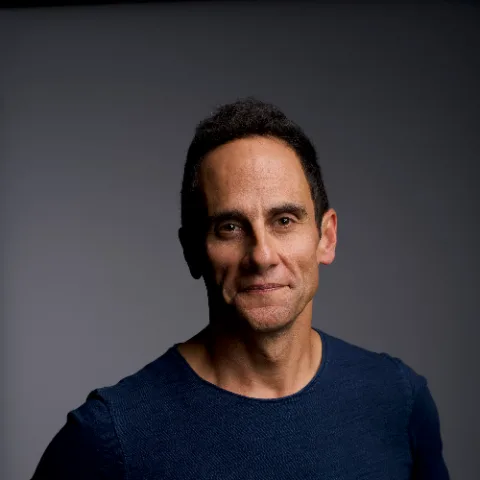
Founder
I try to be a blend of ambition and introspection—a founder of multiple businesses, a strategy consultant and a former lawyer passionate about personal growth and meaningful conversation. On one hand, I’m a Type A personality who thrives on productivity, structure, and success. On the other, I try to be reflective, often pausing to step outside the daily grind to explore life’s bigger picture and the ongoing (and never-ending) processes involved, finding moments of clarity beyond the “matrix” of everyday reality (I always joke that the Matrix movies should be considered more documentaries than Hollywood blockbusters!). I aim to bring my experience and a unique perspective to the table. I founded Leave Law Behind (www.leavelawbehind.com), a leading coaching program that helps attorneys transition into non-legal careers, and have launched and run multiple other businesses.
I enjoy speaking on a spectrum of varied and engaging topics, ranging from self-development and parenting neurodivergent children to nurturing my marriage of 20 years to small business entrepreneurship, global events and their historical context, technology scaling, psychological projection, and spirituality as a tool for reducing anxiety and expanding awareness. I aim to be equal parts thoughtful and humorous (and a HUGE sports fan!), I see every conversation as an opportunity to teach and learn. I hope audiences will not only enjoy listening to me but walk away feeling inspired, a little wiser, and more connected to themselves and the world around them. I work very hard to connect with the aud… Read More