

 Apple Podcasts

 Goodpods

 iHeartRadio

 Spotify

 Amazon Music

 Pandora

 Castbox

 Overcast

 RSS Feed

Key Takeaways
- Grief is not reserved solely for death; it is a powerful, transformative energy triggered by any major life disruption or unmet expectation.
- When someone passes away, they do not experience grief or the limitation of death, but rather an expanded state of pure connection.
- Even natural skeptics and intuitive mediums like Deborah Hanlon can experience profound, undeniable proofs that bridge the physical and spiritual worlds.
- Unprocessed grief gets stored in the body, acting as a chain reaction that can be popped open by subsequent losses or stressful events.
- Instead of trying to 'get over' grief, individuals should reframe it as a catalyst for deep inner transformation and personal growth.
Inner transformation often begins exactly where we least expect it; in grief. Brooklyn-born intuitive medium Deborah Hanlon has spent 25 years sitting with people in loss, and her take is nothing like what you’ve heard before. Grief isn’t reserved for death. It’s the emotion that breaks open everything...the life you thought you’d have, the relationship that ended, the job you lost...and under the right conditions, it’s the most powerful force for change you’ll ever face.
Deborah also shares an exclusive story she’s never told publicly: what happened when Pope Francis showed up uninvited during her trip to Rome and sent her proof she couldn’t ignore.
Plus: why cardinals aren’t a universal sign from your loved ones, what the deceased actually experience after crossing, and why “just get over it” might be the worst grief advice ever given.
Deborah’s links:
- Website: deborahhanlon.com
- Instagram: @deborahmhanlon
📖 Reassembling Yourself: Turning Grief into Growth | deborahhanlon.com (https://link.amazon/B0c9hVXlI)
Resources Mentioned:
In the Presence of Proof: A Medium’s View of the Afterlife and How to Create Heaven on Earth — Deborah Hanlon (her first book) (https://link.amazon/B0hUxsnkR)
Illusions — Richard Bach (https://link.amazon/B0agaPI9I)
On Death and Dying — Elisabeth Kübler-Ross (https://link.amazon/B0eXB2bwe)
The Way of the Peaceful Warrior — Dan Millman (https://link.amazon/B01Hib32l)
The Skeptic Metaphysicians is a spiritual awakening podcast for open-minded thinkers who refuse to check their critical thinking at the door. Each episode explores consciousness expansion, enlightenment, soul purpose, and soul growth through honest, grounded conversation with leading voices in metaphysics, psychic phenomena, quantum healing, and beyond.
We dive deep into spiritual awakening, ascension, alignment, and the awakening process without the dogma. From mediumship and spirit guides to Arcturian contact, astrology, and the subconscious mind, we explore it all with curiosity, humor, and zero guru worship.
Whether you're in the middle of your own awakening, questioning reality, or just spiritually curious, this is the podcast for seekers and skeptics alike.
Subscribe, Rate & Review!
If you found this episode enlightening, mind-expanding, or even just thought-provoking (see what we did there?), please take a moment to rate and review us. Your feedback helps us bring more transformative guests and topics your way!
Connect with Us:
🌎 Website – SkepticMetaphysician.com
📱 Follow Us on Social Media – https://www.facebook.com/SkepticMetaphysician |
Frequently Asked Questions
What is Deborah Hanlon's perspective on grief?
Deborah Hanlon views grief not just as a reaction to death, but as a universal energy and the most powerful force for personal transformation when reframed correctly.
Do souls experience grief after they cross over?
According to Deborah Hanlon, souls do not experience grief or sadness after passing; instead, they experience an expanded state of living and a deeper connection.
Why is grief often associated with past events?
A major loss acts like a chain reaction, popping open a basket of previously unprocessed grief from earlier life events stored within the body.
How can an intuitive medium help people dealing with loss?
Mediums are frequently exposed to grief through others, giving them an objective lens and insights from the other side that can help reframe how the living process loss.
0:00 Karen. Yes. Lately on the show we have covered love, fear, which leaves one emotion that we've been politely tiptoeing around. Hunger? Oh, the f*** up, a hunger. I didn't have breakfast. But you think you were always hungry, right? I guess it's not a notion. We're hungry for information. That's just a theme of the show. No, no, no, I'm talking about grief. But I thought I was. Talk about grief, of course. Yes, which honestly is very unbrand. After all, avoiding grief does seem to be the most human thing there is, right? But this being the skeptic manifestations, we weren't about to do out of box tissues, five stages, Elizabeth, Kubla Ross version, Mesh Reston piece, although she might actually make an appearance on this interview. Instead, we followed the metaphysical footprints, skipped the sympathy card and went straight to a medium. Because who knows more about loss than someone who's still taking calls from the other side. Wow. And fair warning what she has to say about grief might just take everything you thought you knew about it and gently ask it to scooch the hell over. Oh, I need this.
1:06 Yes, you do. Then this is the skeptic manifestations. My name is Will and I'm Garrett. And unlike Mulder and Scully, we've embarked on a journey of discovery. We've talked to people deeply entrenched in the spiritual and metaphysical world. We've thrown ourselves into weird and wonderful experiences. I even joined a covenant with you. And, wait, you joined a covenant? Yep, all in the interest of fighting something. Anything. That will prove that there's something beyond this physical three-dimensional world we all live in. This is the skeptic manifestations. Hey there, I'm Will. And I'm Karen. Welcome back to the skeptic manifestations. It's a show where even the dead have to show their work. And where just get over it might be the worst advice ever given.
1:53 Deborah Hanlon is a Brooklyn-born intuitive medium, an author and a teacher who spent more than 25 years sitting with people in grief. Having lost her brother to a rare child who cancer in 79, she says it somehow she knew that he was gone and yet at the same time was still present. This at the ripe age of three. That contradiction drove a lifelong search for proof and she now holds a master's in psychology founded the center for being knowing and doing in 2007 and wrote in the presence of proof a medium's view of the afterlife and how to create heaven on earth. I'm excited to get the opportunity to chat today with the one and only Deborah Hanlon's ever how you doing today.
2:40 I'm so wonderful and thank you for having me on today. We are excited to have you. Thank you for saying yes because you know it doesn't always happen. That's true. Well, he's asking. Let me just let me just preface this by saying this cannot turn into a two against one thing. No, it's not. Okay, all right. Because I know there will be a lot more against one. Okay, you know what? I'm going to leave. I can't. All right. Well, Deborah, we really appreciate coming in talking to us about this topic, which is really it's one that's hard to approach without a lot of hickritches around because grief is a very natural thing for the human race to deal with, but nobody actually wants to. Everybody always runs away from grief. We just want the good stuff, right? Well, sometimes though you don't mind, sometimes you get sucked in and you stay there.
3:35 That's right. That's right. So thankfully, we have someone who is an expert on not getting over it, but rather dealing with it in a much better way. Right? So what are we talking about here, Deborah? Let's give a first dive into the topic so that we know exactly what it is for approaching. So a dive in is I really want to sort of put grief in a context where it's a little bit reframed. And I'm not talking about polypositivity. I'm not talking about toxic positivity. This is not that at all.
4:16 And I'd like to reframe grief because I'm I say in my book, I've been pickled in grief since I'm three with this, you know, with my life story, the backstory. And then that got me thinking like, we all are. We all have a story. We all have grief laid in in our past. And of course, that's in our body. And so this profound emotion or energy that's an interchangeable word is actually the most transformative energy we can be exposed to. And so the reframe to grief is not to be like, hey, I'm so glad that this terrible, horrible thing completely broke me apart. But yes, now I have an opportunity for change in transformation. Like we wouldn't make that leap. And yet, that is what it's capable of. It is capable of, you know, nothing breaks us down and completely makes us challenge and question everything about ourselves about the world around us like grief. So to me, it's it is the most potentially transformative energy slash emotion that we're going to be exposed to. So if we can keep it in that context, we can perhaps experience it a little bit differently.
5:38 Right. So, you know, that kind of speaking about that, there are people that have different levels of emotional response to to sad events. Some people just get so stuck in it and they're devastated. And other people just kind of, you know, okay, this happened and not brush it off, but it doesn't affect them or impact them as much. So would it be less transformative to someone like that? Then it would be to someone who's like, just really in it. That's a great question. So anyone who thinks they're not affected or much more deeply affected because that energy is going somewhere. It doesn't just, you know, yes, people are stoic and they can be like, well, I wasn't taught to show my emotions. So I'm not going to, but we're talking about energy. We call it an emotion. We call it grief, but grief is a frequency. It's an energy. And when we are touched by it, it gets stored in our bodies and it gets, it does something somewhere. So those who are saying, like, yeah, no, I don't really get that down.
6:39 It's like, no, you're not in touch with the emotion of getting down, but your body is experiencing that frequency. Okay. Well, so as a follow up, one if someone just doesn't really care that much about someone and they pass away. So is it possible for someone to not be affected because it just don't care? And if so, how can you tell the difference? Oh, totally. Yeah. I think there's different levels of, you know, not all deaths are the same because you can, a death of a spouse is not the same as a parent. It's not the same as a child. And I hear this 24/7 where, you know, someone's lost all three and they're like, oh my gosh, all three deaths were so incredibly different. But sometimes, people are a little bit more in tune with the fact that when you cross, you cross. You're not actually leaving, but loss of grief is more of a loss of an emotion that you feel for yourself, not for others. So our entire lives, we're trying to walk ourselves back from being sad when someone dies. And now you're saying that we actually have to feel it. So I help you out here. I don't know what to do. So yeah. So well, grief, we often think grief is completely connected to death. And that's one of the things that we really need to unpack because grief is not reserved only for death. And that's what my new book is mostly about. It's about all the grief that life brings us. The grief of the life we thought we were going to have and didn't. The grief of maybe we thought we were going to have
8:13 children and we didn't or we thought parenthood was going to be one way and it wasn't the loss of a home, the loss of a relationship, loss of a job. So grief in that larger context, then you see like, wow, actually we all have deep, deep grief that is largely unprocessed because we don't think about it unless it's with the death. It's the death of a person that I say pops open all the grief and we put it in the basket of the death, but it pops them all open. Everything gets disrupted. And it just is like you ever see those rooms where they have like thousands of mouse traps set up and they like drop a ball in it and it hits one mouse trap and then they all go off. That's it's a chain reaction. So that's why death is so or grief is so associated with death is because they all get popped open then.
9:09 But a death of a level and we'll pop open that time when you were five and the bus driver dropped you off at the wrong stop and you panicked and you didn't know what to do. You know, it just brings up so much. So Deborah, how is it that a medium, how is a medium better suited to handle the question of grief than just a regular average Joe like Karen. No, lean. Regular average Karen. I don't think a medium is better equipped with it. I think we're exposed to it more, you know, dally and we're exposed to not our own. We're exposed to someone else's which gives us some more, you know, an objective relationship to it. So we can kind of see it and feel it and know it differently through someone else's lens, whether it's someone who's passed or someone who's current, but I would never want to put it out there that mediums are kind of special in the arena of grief because we're all human and we're all feeling all the things, even the things we don't think we're feeling.
10:16 Right. So this is something probably only you could answer or other mediums. When someone passes over, does that soul experience grief to have left the loved ones or are they just so enthralled with being part of the consciousness or God or whatever that they don't have that grief? Yes. So I believe you'll get a different answer with the different mediums and it does come down to our own relationship with it. Consciousness, the whole dynamic. I do not feel that when we pass, I never feel someone coming through or hear someone coming through saying, oh my God, I'm so sad. I died. Oh my gosh, I'm without you. I'm disconnected from you. In fact, it's quite the opposite. They feel more connected than ever before. Less grief, less pain. Death. The irony of death is that we hear on the physical side of it, the ones sort of remaining. We experience death. The deceased do not. They experience a much more expanded version of living. So this idea of the people who died have death is not accurate. Those of us here have experienced the lack of physical connection, which is what we interpret as death. They have the opposite. They are finally more connected than ever before.
11:44 Right now, the three of us, we only could be here right now on this podcast or somewhere else. We couldn't be on this podcast and somewhere else. Right. So they don't have those limitations. So when we don't have limitations and we have pure connection, there is no room for grief, for sadness, for disconnection, for limitation, for on and on non. Well, you say that, but I am here right now, but I'm also at my ice cream shop meeting at the hot point someday and I'm really loving it. So This reminds me of a book. I don't know if you've ever read "Ellusions" by Richard Bach. Yeah. It's a very short book. It's basically about this guy who's meet well out on his books. It's incredible. You can read it in a day if anybody's listening. Read it because it's a great book. I actually enjoy all of Richard Bach's books. But at one point, some has this book. And whenever you open the book, it opens up to the page or whatever you need to hear. And the sky opens it up one day and he's going through some stuff. And it says, I remember exactly what the caterpillar calls the end of the world. The master calls the butterfly. So I guess we're here all being caterpillars. Right. And then the transition. I'm pretty sure she's called those worms. Absolutely. I don't even think we're as high as more than that. They're nicer. They have a much more ability to be present and just being this. Yeah. Well, your first dip in the toe of this world was when you were three years old.
13:18 Right. How you mentioned when you lost your brother, you were three and you said that you knew he was gone, but yet still knew that he was there at the same time. How does a three-year-old hold both those at the same time? Yeah. I think three-year-olds are probably the ones who best can do it because they they don't have the conditioning of what's right, wrong, real, not real. It's all it's all there. It's all available. So I do feel like, you know, the three-year-old me was so clear, so much more clear than perhaps the today-year-old version of me, although maybe not. I've literally spent my life on this.
14:02 Like this is all I love. This is all I'd love to study, to read about, to think about. I am a natural skeptic. So, you know, I would be very skeptical of all mediumship. If I didn't do it myself, I would be very intellectual about it and fortunate that I've been on both sides of it. Well, it's interesting because everyone that we talk just says, if you use too much of your intellect, you shut it down. It's the intellect you get to the way, actually. So how do you how do you walk that line? Well, there's a part of me that loves the intellect and the skepticism because it keeps me also very grounded because I am not, you know, someone who will believe something just on faith. I'm not wired that way. I am wired to believe based on proof. And so with that proof, the intellect has to come in.
14:57 So to me, it keeps me kind of grounded and it keeps me still questioning versus, you know, just accepting something as is, which is, which is a beautiful thing when people can do that, but I'm not naturally wired that way to do that. So it keeps me grounded. It makes me feel, dare I use the word normal because none of us are normal. I would say this is the new normal, right? So that's fascinating. So first of all, welcome to my world. This must be you. I know it's good to see someone exactly like me, but so my challenge in all of this is that in my in my search for that proof, I seem to be finding that I still need to find more proof, right? There's never enough proof that he has had so much proof.
15:45 The proof has smacked him in the face and he still wants more proof. So what what tipped you over the edge finally to thinking, yeah, this is this is all legit stuff. I'm not going my mind. Not losing my mind. It's the same for me. I still I still like I have a science mind like I still like to take the like what if it's not then then what is this? You know, to describe it as as something else if I had another understanding or another truth about this, I would be equally as happy with that truth. I just want what is true and real. So on one hand, like my first book is called In the Presence of Proof because I am in the presence of proof not from connecting to my own people, but connecting to strangers people. That was the proof because I know I don't know that person who's sitting across for me. I know I have no idea anything about them and then I know things. So that to me has been worth more proof than any proof and I've received a lot from my own loved ones and my own people, my own experiences, but the real proof for me has come through all of you. So what's the most proofy proof that you've gotten like there's something a situation or maybe with someone that just blew your mind. You're like, yeah, there is no way this is not real. I have that every day, literally not to sound ridiculous, but every day I have that. However, the top one of the top
17:21 experiences and I've not shared this on any podcast and I've not shared it on my own social media platforms. You are. You are breaking this this news. Part of it not sharing was because it was so powerfully sacred to me. What occurred? The short version is last year in April of 25. I had planned to go on this retreat to Italy and it made no sense that I would be there. I had just, I lead retreats in Costa Rica. I'm gone for six months, six weeks and this retreat, I was home for a week and I'd have to leave for another retreat and it made no sense, but I knew I had to be in Italy.
18:04 I had to be there. So I signed up. The Monday before I left, hope Francis died. And I thought, oh my gosh, now I've been away for six weeks. I've been out of the country. I'm leaving the country and now I'm going to Rome and Rome is going to be completely chaotic with the passing of the Pope. And so I was kind of annoyed that I had planned the trip. I had listened to my intuition the November prior book, the trip, blah blah blah. And now I'm annoyed like, oh, this is going to be a hassle. I leave on Monday afternoon. He passed on a Monday. Monday afternoon, I started to feel the Pope and I thought the skeptical me was like, oh my god, that's stop. Stop. You are not feeling the Pope.
18:55 I'm sure his security detail was also saying, hey, please stop feeling the Pope. All right, guess. Well, funny. You should say that. So I was annoyed. I really, I'm like, oh my god, you heard the Pope die. This is just a thought. This isn't really him. The Pope is not coming to knock it off like you. Not stop. And again, I'm a skeptic. Okay. He's on like stop. But I felt him. I felt him. And then I left like, how do I know it's him? What did I never met the guy? So how would I know it's him? Fine. I'm like, brush it off three more times. I get the sensation. I feel the Pope and I finally, and for my own sanity, I say, you know what? You know what? Pope Francis? I am not a religious person by any means. I'm like, you know what? Pope Francis, like if this is really you, you are going to have to put someone who is close to you in my presence. And that is the only way I will, I will listen to you. And I didn't feel again. Didn't think about it at all. Friday I leave for Italy, land in Rome Saturday morning. I had made plans to meet somebody in Rome for dinner.
20:06 Saturday night. She was running late. She said, my boyfriend is going to be there before me. Here's what he looks like. He's going to sit with you until I'm there. Great. He sits down. We do the whole awkward stranger pleasantries. You know, like, what do you do? And I don't like small talk. I am not good for small talk. But we're doing the small talk. And English is his third language. So he's quite fluent in it. But there's a little, although all the awkwardnesses, right? And so I say also, do live in Rome. And he said, well, I live in the Vatican. I thought, I didn't even know people lived that's how much I know about the Vatican. So I'm like, the Vatican really, like, what do you, what how? What do you do there? He said, I'm a Swiss guard. He said, okay, huh. Wow. So now, all the blood drains from my body. Yeah, I bet. And this person, I won't totally identify him, but this person was very close to Pope Francis. Like, he was supposed to marry him when he and his fiance were to get married. He described him as like a grandfather to him. They were very close.
21:28 Oh, so many goosebumps. Wow. So now I'm sitting here. I don't know this guy. I don't even know if he knows what I do. And I'm like, oh boy, brother, do I have a story for you? He's been, what Francis is chatting my ear up on Monday? I'm pushing the Pope away. Like, Deb, knock it off. You know, get medication. Deb, stop this, right? And now I'm here with him. And I'm like, whoa, what do I do? Well, I'm not going to tell this guy. Oh, I was talking to him. I'm not going to say that. Long story short, his girlfriend arrives. We have small talk of a bump up up. And at the end of the dinner, she said, so have you heard from him? And I knew who she meant, but I wasn't going to admit that I knew she meant. So what do you mean? And she said, oh, they call him Papa Francesco. Papa Francesco. And I was like, actually, I did. I really did. So we set up time to do a session, to do a reading with him so that it could be a proper, because I'm like, listen, I've been on a plane.
22:34 I haven't slept. Like, I'm freaked out. This is pretty amazing. Wow, wow, wow. So we, the following week, I met them again at a really like secret bar in the belly of Rome. I mean, it was straight out of Da Vinci to the whole thing. I was just going to say that. I see Robert Ludlow somewhere in your body. It literally felt like that. And I'm like, this is... Langdon, yes. And I did a reading for him, and there were no doubts that this was his dear friend. They were very close. So that one is the one that I returned to because the irony of that is that here I call myself a skeptic. And proof is my big thing. Faith is not my big thing. And yet the person who taught me faith was Pope Francis.
23:28 Like the irony there is like, okay, I am, I've been doing this my entire life and I still require proof. And yet that moment, I'm like, wow, would you just please believe it? First, Deb, would you just stop pushing in a way? Right. And somewhere on the other side, Pope Francis is going, hee hee. Wow. What a fascinating story. That was amazing. Thank you for sharing that with us. That's incredible. That is incredible. It was incredible. And now, now I talked to him. Now I ask him for guidance. Now I say, hey, look over, look over this. Help me out here. Give me guidance. Direct me. Like now I feel like I've developed this little, this little relationship. It's not daily, but you know, I call them. Yeah, it's like I'm bringing the big guns. I'm like, I really need to have an upbringing in him. And his energy was like absolutely glorious to bring through. Like just a very loving. Yes. Like and very normal.
24:30 Like the things he shared were so not Pope like. And that was really interesting. I don't know that. I want to know what that is. But anyway, so it's hard to make the transition now from a beautiful Pope Francis story to back to grief. Because I want to get back on track for a second. So the only I can do is I can make the connection between one celebrity to another. Right. And so Elizabeth Kubler Ross, who is, is world renowned for writing the fabulous book on death and dying. She actually spent time in your family's home. Right. What did you absorb from growing up around that kind of death conversation from from her that that all of that. But in researching, Elizabeth talked about the five stages of dying. And in your in the research I did for you.
25:20 Elizabeth ends with get over it. You're saying, no, no, that's not really what we're meant to do. So how does it how are you differ from that? So her her stages of grief, first of all, I feel very blessed that I was around pretty amazing humans at the forefront of death and dying so young. And I would expose to the language of grief and and at my family were progressive at the time. Like, you know, it wasn't I wasn't raised in a family where it's like look what wipe that look off your face. Like we were allowed to express our we were encouraged to express our emotions in what we were feeling. So thankfully that's my conditioning. So emotion is not a strange or weird thing in my background. So the the foundation was there. And Elizabeth's work it's she's describing grief in a very particular setting. She's not necessarily talking about grief of life. And I'm expanding the grief conversation to look at life as a bedrock of grief because that's our little superpower. So hers is very contained to the death and dying experience grieving the loss of a loved one.
26:36 And I'm I'm talking about grief. I feel like I'm expanding on her work, which is amazing irony with all of it because you know she was she is in my my three year old psyche for sure. So with everything that you've learned and experience and the books and everything. How can you help we talked earlier about some people just getting stuck. Like how can what you've learned help someone get out of that? Because when you're in it, I mean some people never get out. Mm-hmm. I think I think there's so much but I think we all have this idea of what it looks like and how we should move through it and with it. But we forget that our conditioning plays a large role with how we are able to handle grief. Like I said, I was I was able to express we were encouraged. If we were angry, we were able to express anger in my family where a lot of families are like that's not nice, that's not kind special especially for women like it's not polite, it's not good.
27:43 My parents got us a punching bag. You know like they figured out ways to help us channel our emotions in a way that was was positive or or or helpful and useful. So not everybody has that conditioning. So if you're raised in a in a family that does not promote your own authenticity, what you feel is real and you're allowed to express it, then I imagine grieving the death of a loved one is going to be complete gridlock for you because not only are you going through devastation but you don't have the tools to express it. So what do we do in that moment? It's it's all everything with grief is all about presence. It's being with it as it is, the good, the bad, the ugly, you know, being with your own thoughts, recognizing just how horrific it is, horrific and sporadic, there's no template.
28:39 I call it like the way we think grief is like we're all Goldilocks. It's like I want to express myself but not too much. I want to heal but not too fast but not too slow. Like everything has to be just right with grief and that's not the case. Nothing is right and so we have to really really get present and learn how to move with it. Right. Well I love what you said earlier on in the show where nothing has the power of transformation greater than grief and in the show we talk a lot about the fact that growth only happens at the edge of your comfort zone and how much more comfortable is it to actually sit in grief and process that. So your book is reassembling yourself. I'm curious, what is it when we feel grief that breaks? Everything. Everything we knew to be true, to be real, to be solid. It just breaks and you know it depends on who or what or the scenario but it just breaks our version of the world. So when someone dies our relationship to them is now in our minds broken on the physical side, not on the energetic spiritual side. That's the other discussion of this but for humans we are completely broken because a connection has been seemingly and physically disconnected. So everything breaks but like I said before it's like the chain reaction of
30:11 this death now brings up all of it. It brings up that time and you know your eighth grade boyfriend broke up with you with the dance you know like just even things that we thought were like "oh that's kids stuff." It's like no it got stored it's in there and we never dealt with it, we never processed it and now it all opens up. Right. Which is like a new blank slate you know it's like "ah it's all coming out." Right. So how does someone reassemble themselves when their experience in grief? So there's no answer. Oh my god Deborah, here you do so good. Well there's no one formula there's that and that's so important is like this is an opportunity to really be with yourself. Do not betray yourself meaning do not go against what you're feeling. Let whatever you're feeling no matter how absurd it is to be felt. Maybe we don't need to act on everything we're feeling but to feel it and to be really like wow you know sometimes it brings us to the point where like I don't want to be here anymore either. Well let's get in contact with that. Not act on it but let's let yourself feel that that depth of devastation. It's also to be witnessed with someone else. One of the big parts of my book is that there's a my favorite quote it's it's listed in many places in my home and it says when
31:42 you can't look on the bright side I will sit with you in the dark and that says everything to me like grief needs to be held and we need to either hold ourselves if we are the griever we need to sit with ourselves in the dark and when we are with somebody else like they people don't need advice we don't need how to's we don't need a formula we don't need to like you know what you should do you should go do this no we do not need that I do believe that everyone has unbelievable inner intelligence and when we're allowed to sit with our intelligence we organically allow what is to unfold from ourselves to rise so advice I don't want to give some an advice I want to create the conditions to where the advice arises from themselves and they're then able to take the next step so it's about presence just be with yourself or someone else in the dark. That is a beautiful quote and you just broke Karen so normally I am the one tearing up. It's just that the timing of this conversation is pretty pretty critical. It always is now you said a lot of times when someone again we're talking now on the because you're a medium I can't help but talk about death as it caused for the grief so the first thing someone will say when someone passes and they're grieving is
33:19 I need a sign and you sign that you're okay right so everyone says oh look for a cardinal look for whatever right these universal signs that people say are out there and yet you say that's not correct what what now what do you do with that? yeah it really bothers me because you know social media everyone will put up like well the cardinal is a sign for your loved one and it is for those that it is but it's not a universal sign there are no universal signs I think humans we like to break everything down into like shortcuts so we think oh cardinal sign dream of dimes pennies nickels dragonflies ladybugs feathers we hear all the things but but that really dismantles your own ability to create your own conversation and your own signs and I call them winks but it it's much more important to me to work with someone to develop their own language versus following someone else's language if you feel that a cardinal or whatever the thing is is a sign if you feel it then it is but sometimes people they're like I don't know I never I never see cardinals or what about parts of the world where red cardinals don't exist what signs don't come to them so it it's a very to me it's a very silly small archaic way of looking at things versus a much more expanded you know when you hear that song that plays for no reason when you think of
34:52 them and all of a sudden you know the waiter comes up and has the name of your father and you're thinking of him four minutes before like there's so much many thousand the millions of ways that we need to be open to them versus like out of find the cardinal and you do you I'm sorry you you do feel it you know you could tell like and then you see it more like years ago my best friend passed away and we used to use this magnolia oil kind of for perfume when we were on college together and I remember thinking about her and I was so sad it was right after she passed and I just like show me a sign show me something so the next day I opened up my phone and my mother sent me a text and there's pictures of these magnolias and she's like I don't know why I felt compelled to send you this picture and then I was working I was about same day I was working I had a photo shoot and I drive to the shoot and the address is magnolia drive or magnolia lane and as I'm coming home I had to take a detour and I'm going through and all these magnolia trees blooming it was incredible yeah yeah yes you cannot make that up you can't make that happen yeah yeah and you do the thing with signs is everyone thinks it's like a lightning bolt from the sky right like it's amazing and and some are like that amazing but most aren't most are subtle like here you go you feel this moment of like if it gives you one breath that's a sign that's a week not to be then guy calls things out but
36:23 we're talking you just told us about this very specific thing you asked Pope Francis demanded Pope Francis to give to you before you could believe you I know how dare I well that was more of me being like all right I stopped like I don't want to become that medium that's like oh I talked to this celebrity and I don't want to talk to dead celebrities unless their family is with me you know like I'm not going I don't believe it unless I have the proof myself still before every session I'm literally say to them prove it to me again show me again do it again every single time and the Pope never shows up it says come on he's the one that made me realize like maybe you could be a little less hard on yourself maybe just believe just to believe what else do I have to do believe right who else here could teach this to you who do you need we're making a lot of situation but but the true point of the topic or the conversation now this particular conversation is being open to having to show you whatever way is best for you versus trying to force a sign that may or may not have any bearing on you to come because then if you're looking for a cardinal and it never comes you go all it doesn't it doesn't work it does not real or whatever right so the open is the important thing
37:57 open and yourself you know this is all about the individual self of of that's where the real work is with the self so you don't want to arbitrarily take someone else's sign because it's like it wasn't necessarily felt within you again that's intellect oh look for the cardinal oh I found the cardinal there's no feeling to that but when you feel it you're like it could be a stick of spirit gum and you're like wow that's my so and so you know it doesn't have to be anything so majestic and magical and I think a lot of mediums do present it as so and I think that's doing a disservice to all of us who are just in that devastated moment and we all feel disempowered in those moments because it's it's like oh I don't know I don't I don't normally feel that I don't normally get a sense of like I said it's sometimes a sign is just like thank you right right that's it it's not something bigger right so Deborah from one skeptic to another doesn't open the door to people saying oh you just dropping circumstance or what senses and lap and explaining that as your sign totally and I think of that every hour on the hour and so then as the non-sceptic why not sure sure
39:27 and I wish I was wired more like that I wish I could receive something and believe it just because I was told it I have to experience it and integrate it through my own system still I mean I believe this I do think there is something very important for a mental health too to have healthy skepticism though because I do also meet people that that have been to mediums and they'll say oh the angel wing the back pain that I'm having are my angel wings coming through and I'm like I think you should probably see a doctor you know so you know I don't I think there's a range and I think we need to err on being human and in the human realm we still have to be human and expand to the sort of non-human experiences but some healthy skepticism and and says I'm not just believing anything at face value I think is equally helpful you know to completely shove it all off of like that's ridiculous and everybody's crazy I think that's extreme but to believe the back pain is an angel wing popping in I think is also an extreme that's not quite helpful sure right well your team sent in a series of questions and one of them really jumped out at me as a fun alternative to what we're talking about and I love throw this to and tell him see what you have to say about it but blame your team don't be me I think come over this question right so fantastic the question is what is something
40:59 that you believe about death consciousness or medium that even other mediums would degree with wouldn't agree with would not yeah that would disagree with that your loved ones are suffering or that they didn't cross over or that they're upset that they passed that there's evil or negativity on the other side that there is something called the other side I mean there's so much I I have a very complicated relationship with the title medium I thought at this point in my life I'd have a PhD in like neuropsychology so the the title medium I also feel like is like a little weird a lot weird and yet here I am and I'm in it I am it the idea that curses hauntings unrest paranormal all of it I don't I don't agree with any of it because if you study energy and consciousness those things do not exist in in the study like the mathematical scientific arguments for consciousness and presence of beingness and light and you know all of that those things but they're very man-made and I do feel like they're it's a little bit like sayoncy and entertainment based and like 1850 I think we really have come a long way with how consciousness works we still don't know what it is but we're
42:34 closer right so why have we not upgraded this idea of it and yet there is some recorded events that are difficult to explain away like poltergeists or things that recorded evidence that points to something that's happening how are you reconcile that so I think what happens with humans is that we then place those poltergeists events as if there is an energy that is upset or trying to make themselves known like we are interpreting it incorrectly so it's I don't feel like they're upset my gosh if if if energies who have died could come back and do evil things don't you think news news would be broadcasting that everywhere I mean the news love to be like evil spirit you know drops dog off of building like they would love that my gosh and think about trials for like criminals they'd be like oh no the sensitivity made me do it yeah exactly exactly I mean I think that's what he's happening they just not even the term evil spirits or you know just evil people I don't know if you're thinking of demonic possession yeah such a thing so okay so just to be trying to understand them what you're saying is that there is no fear nothing to fear from what you say it doesn't exist no other side doesn't exist but the crossing people that are things
44:08 that cross over into wherever we go after we pass have hold no anger hold no judgment hold no reason for us to fear and things that we do feel as fear we are misinterpreting because it's just a natural occurrence we're misinterpreting it because we're coming at from a human lens on something that's more expanded than being human so we you know people will say like oh did they have jobs like what that's a human concept job sorry there's no animal outside in nature there's no tree that's like my job is to you know make chlorophyll it's not a job a job is a human concept so we keep adapting human concepts on something that is much more advanced than just a human so from that lens I think we have to look at like our vocabulary creates limitations and beliefs that get misinterpreted which is which then you know makes us feel like you know this I have no power makes us feel very fearful right and an idiot that makes us fearful is not good but no matter what it is I think and I could be wrong you would know but as far as like the the evil beings I think just from the weird kind of experiences that had in my life at these are our entities that are afraid because maybe they don't understand what's happening and they're you know I don't think it's an anger or I hate it's like oh my god I don't want to do sort of but we're interpreting it no could be so if well
45:42 if we if we were in a room like say say you're doing dishes right and your your hands are doing dishes and your back is faced to the rest of your kitchen if someone snuck up on you and you didn't know who it was and all of a sudden you felt them but you didn't turn around yet you would instantly be nervous because it's startling you but as soon as you turn around and you go oh that's so and so you're not as startled so my idea of that is that if we are feeling energy that we are not either expecting or familiar with or it's out of context instantly our own sort of back goes up but what happened is is that the moment that happened humans took that glimpse and realized there was an entity there was an energy that was bad but if you look at it and engage with it you'll go oh this is not negativity this is not evil this is not someone who's at unrest this is just I wasn't expecting that energy in that moment and you can be with it versus making rash decisions and up it's an evil spirit and I think that's what we do anything we don't explain we call evil that's ludicrous we assign malintent yeah absolutely because we're uncomfortable right yeah well I'm uncomfortable now because we have in the conversation fast I did go very fast
47:12 your yoga is called re-self it's a longer title it was full titles re-assembling yourself turning grief into growth and I leave I'll leave you with the last thing is that I look at grief as like a piece of coal you know if you've ever held coal coal is very very heavy very hard very sharp shiny and the minute it touches you it gets all over everything it's very messy so grief is like that the minute you experience it it gets all over everything it's very messy however that same piece of coal under the right conditions like a fire it can make a freight train move and so I look at grief with that under yes it's messy it's yucky it's sharp it's cold it's all the things and under the right conditions of presence witnessing sitting with yourself in the dark you can make that power you in a new way that you never ever thought possible and I like it give us the term good grief good good good grief well yes all right with Deborah if someone wanted to reach reach out to you to connect either with medium questions or to purchase your book what's the best way for someone to do that yes they could find my website which is debrahamlin.com or on Instagram at debrahamlin all right we're going to add a direct link in our show notes to those locations all you need to do is go to scepticmanifosition.com go to her
48:45 episode page you'll find the link in our show notes easy for you one click connection to debra Deborah thank you so much for being on the show you are wonderful this conversation has gone so so so fast and it was so much fun we really appreciate you sharing your expertise with us oh and I appreciate having you on and spending the time with me so thank you thank you and then I'm going to leave you with the closing line that you've used in other shows don't forget the curiosity can always be used as a doorway and that is the perfect way to end the show thanks much for being [Music]
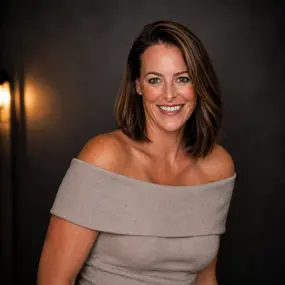
Author, Intuitive Medium & Grief Transformation Expert
Deborah Hanlon is the author of ReAssembling Yourself: Turning Grief into Growth and a grief and transformation thought leader whose 25+ years as an intuitive medium have given her an extraordinary vantage point on what loss does to us.
With a Master’s degree in Psychology and the perspective of a science loving skeptic, Deborah explores grief through psychology, energy, consciousness, and our continuing connections to the people and lives we have lost.
Her work challenges one of our most deeply held ideas about grief: that healing means moving on. Instead, Deborah believes we learn to move with grief, allowing it to become part of who we are becoming.