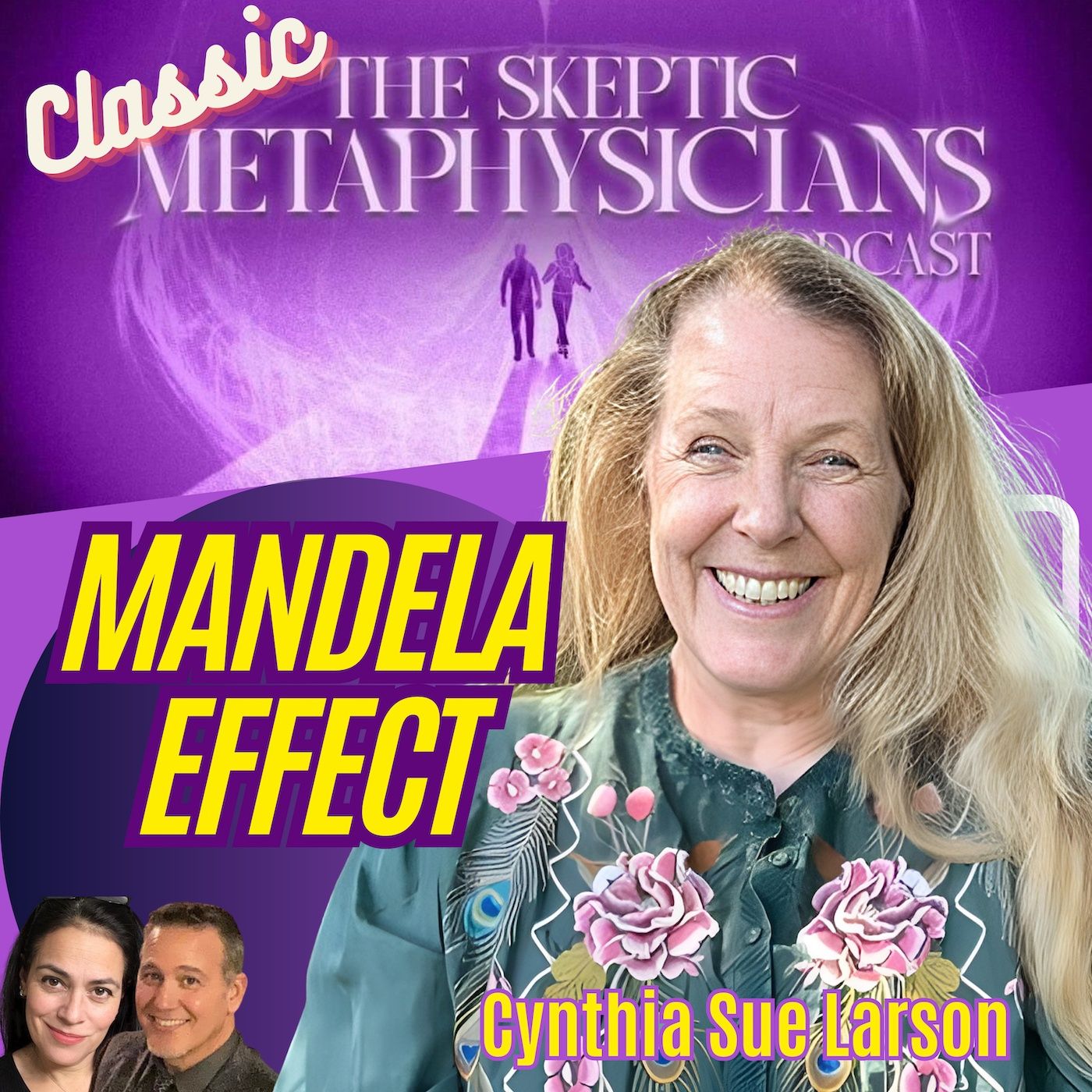
The Mandela effect occurs when masses of people share identical, vivid memories of historical facts, movie lines, or pop culture details that objectively never happened. Rather than simple memory glitches or mass hysteria, UC Berkeley-trained physicist Cynthia Sue Larson explains how cutting-edge quantum mechanics, including QBism and reality bubbles, suggest we might actually be shifting between parallel timelines.
Key Takeaways
- The Mandela effect describes collective false or altered memories shared by large groups of people worldwide.
- UC Berkeley-trained physicist Cynthia Sue Larson connects these anomalies to quantum physics theories rather than just psychological explanations.
- Interpretations like QBism (Quantum Bayesianism) emphasize the deeply subjective nature of human observation.
- Physicists like Eric Cavalcanti propose "Wigner bubbles" or reality bubbles, suggesting individuals can experience different versions of reality.
- Historical records show that these mysterious reality shifts have been documented for well over a century, long before modern particle colliders.
Beyond Bad Memory: The Physics of Reality Shifts
When most people encounter the Mandela effect for the first time—whether they remember Curious George having a tail, Darth Vader saying "Luke, I am your father," or Nelson Mandela dying in prison during the 1980s—mainstream science immediately points to cognitive bias. Psychologists call it confabulation or the telephone game effect, where the human brain fills in memory gaps with socially reinforced misinformation.
However, when speaking with rigorous scientific minds who refuse to blindly accept standard dogma, a much more fascinating picture emerges. Physicist Cynthia Sue Larson points out that reality anomalies are not merely modern psychological quirks amplified by internet echo chambers. By examining historical archives compiled by paranormal researchers like Mary Rose Barrington, we find documented accounts of disappearing and reappearing household items—what Barrington termed JOTTs (Just One Of Those Things)—dating back over a hundred years.
QBism and Subjective Reality
To understand how reality itself might shift beneath our feet, we have to look past classical Newtonian physics and venture into quantum mechanics. One of the most compelling frameworks discussed in modern theoretical physics is QBism, short for Quantum Bayesianism. QBism treats quantum probabilities not as objective properties of the physical world, but as expressions of an observer's subjective beliefs and internal state.
If our observations actively participate in collapsing the wave function of reality, then two people holding slightly different subjective states might legitimately register different outcomes. This subjective collapse bridges the gap between hard physics and metaphysical principles, showing that consciousness is not just a passive bystander in the universe, but an active architect of what we perceive as tangible fact.
Wigner Bubbles and Parallel Timelines
Another fascinating concept explored by physicists studying these anomalies is the idea of "Wigner bubbles" or localized reality bubbles. Originally inspired by the classic thought experiment known as Wigner's Friend, modern physicists like Eric Cavalcanti have pushed these boundaries to explore how different observers can experience entirely conflicting versions of the exact same event.
Imagine walking through life on autopilot, letting your brain stitch together the gaps in your attention. According to quantum multiverse theories and reality bubble models, when our focus shifts or when collective societal consciousness undergoes a massive pivot, our timeline can quietly adjust. While skeptics dismiss this as woo-woo thinking, quantum mechanics routinely demonstrates that reality at the subatomic level is far stranger, more fluid, and less absolute than our macroscopic senses care to admit.
Conclusion
Exploring the intersection of quantum physics and the Mandela effect challenges us to drop our rigid assumptions about what is truly possible in our 3D world. Whether these phenomena are driven by shifting quantum timelines, subjective reality bubbles, or deep mysteries of human consciousness, they remind us that the universe is infinitely more magical than we realize.
Ready to dive deeper into the science of timeline jumping? Listen to the full episode of The Skeptic Metaphysicians to hear the complete interview with physicist Cynthia Sue Larson!
Frequently Asked Questions
What is QBism in quantum physics?
QBism, or Quantum Bayesianism, is an interpretation of quantum mechanics that views quantum probabilities as subjective Bayesian degrees of belief held by an observer, rather than objective features of the physical world.
What are Wigner bubbles?
Wigner bubbles refer to theoretical frameworks in physics exploring how different observers can experience localized realities that do not necessarily agree with one another, expanding on the classic Wigner's Friend thought experiment.
Did the Mandela effect exist before the internet?
Yes. Historical researchers have documented anomalous reality shifts, misplaced objects, and collective false memories stretching back well over a century, long before social media or modern search engines existed.
How does consciousness relate to quantum reality shifts?
In quantum-metaphysical frameworks, human consciousness acts as an active observer that helps collapse probability waves, meaning shifts in collective or individual focus can align us with different timeline realities.