
 Apple Podcasts

 Goodpods

 iHeartRadio

 Spotify

 Amazon Music

 Pandora

 Castbox

 Overcast

 RSS Feed
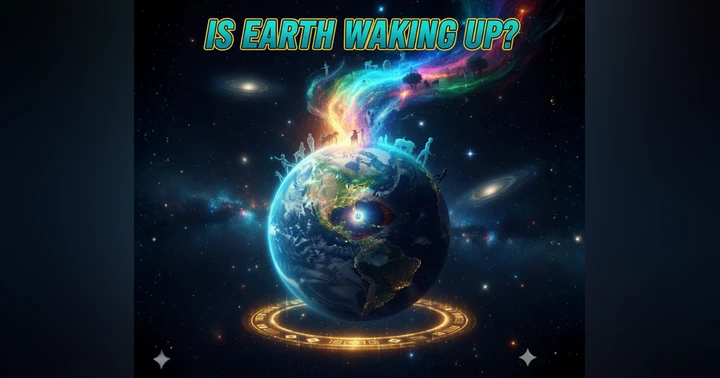
Is Earth literally waking up? Not in a poetic, mystical sense, but in a real, scientific, and possibly terrifying way.
In this mind-bending episode of The Skeptic Metaphysicians, we dive into one of the most provocative conversations we’ve ever hosted: the possibility that the Earth is evolving into a planetary superconsciousness, powered by artificial intelligence, fiber-optic nerve systems, and global institutions acting as synapses in a technological brain.
Our guest, Topher McDougal, is not your typical spiritual thinker. He’s a Professor of Economic Development & Peacebuilding at the University of San Diego’s Joan B. Kroc School of Peace Studies and the author of the forthcoming book Gaia Wakes: Earth’s Emergent Consciousness in an Age of Environmental Devastation (May 2025).
McDougal introduces the Gaiacephalos Hypothesis, a theory that makes the Gaia Hypothesis look tame by comparison. He argues that the Earth isn’t just a self-regulating system, it’s on track to become literally conscious, thanks to the explosive growth of AI, global infrastructure, and what he calls the technosphere.
In This Episode:
- What is the Gaiacephalos Hypothesis, and how does it extend the Gaia theory?
- How AI, machine learning, and planetary infrastructure are forming a neural network across the globe
- The connection between environmental collapse and evolutionary upgrades
- Could the Earth eventually think, feel, or even act as an entity?
- Are we building a planetary cybernetic organism, and if so, who’s in control?
- The parallels between biological evolution, planetary systems, and emergent intelligence
- What we can learn from Black Mirror, cybernetics, and quantum consciousness
- The role of humanity: are we creators, neurons… or expendable?
Whether you’re into mysticism, metaphysical science, spiritual awakening, or consciousness expansion, this is a conversation that will challenge everything you think you know about the future of Earth, and our place within it.
Guest Info: Topher McDougal
Website: TopherMcDougal.com
Book (pre-order): Gaia Wakes – Columbia University Press (May 2025)
Subscribe, Rate & Review!
If you found this episode enlightening, mind-expanding, or even just thought-provoking (see what we did there?), please take a moment to rate and review us. Your feedback helps us bring more transformative guests and topics your way!
Subscribe to The Skeptic Metaphysicians on your favorite podcast platform and YouTube for more deep dives into spiritual awakening, consciousness, spirituality, metaphysical science, and mind-body evolution.
Connect with Us:
🌎 Website – SkepticMetaphysician.com
📱 Follow Us on Social Media – https://www.facebook.com/SkepticMetaphysician | https://www.instagram.com/skepticmetaphysician
0:00 Karen, Yes, he ever felt like the planet Earth is watching. Us all the time. Well, I'm not talking in a poetic way, like an a poetic mother nature sees all kind of way, but something like like the creepy guy, like maybe something is stirring beneath the surface, as if the planet is slowly methodically waking up. Mmm, well, today's guest thinks that's exactly what's happening, and not in the guy as a gentle force spirit sort of way. Oh no, No, he is talking full blown planetary consciousness powered by AI fiber optic nerves and corporate institutions acting like synapses in a global brain.
0:45 Wow. And if he's right, we are living inside of a newborn super organism that's just starting right now to think. So should we be excited. I'm like so speechless right now, or which usually you know, I'm not, uh huh, so little scared. I was gonna say, I should we be terrified or just try turning it off and on again? I mean I've seen the movies, you know. Well, whichever when we're supposed to feel, we're gonna find out about that. All about that on this episode up the Skeptic metaphysition. My name is Will and I'm garious, and unlike moulderin Scully. Both want to believe. So we've embarked in a journey of discovery. We've talked to people deeply entrenched in the spiritual and metaphysical world. We've thrown ourselves into weird and wonderful experiences. I even joined a coven.
1:29 Of witches and wait, you joined a coven? Yep, all the interests of finding something, anything, that will prove that there's something beyond this physical. Three dimensional world we all live in. This is the skeptic metaphysicians. Hey there, I'm Will and I'm caring. Welcome to a bring birthing AI tangling Mother Earth might be sentient now episode of this epic Metaphysicians. Today, we're joined by Topra MacDougal, author, futurist and professor of Economic development and peace building at the University of San Diego's CROC School of Peace Studies. His book Guy Awakes Earth's emergent consciousness in an age of environmental devastation Say That five times Fast puts forward a bold hypothesis. He argues that our planet might through the interwoven networks of AI systems, infrastructure, and human institutions evolve into a planetary brain, not figuratively literally now, he calls his vision Gaia Cephalis hypothesis, and he sees environmental collapse and technological acceleration not as opposing forces, but as co evolving parts of Earth's next transformation.
2:53 And are we inadvertent architects of nascent planetary superorganism? What does it mean if Earth is waking up? And what role might we play in its weakening? This one is definitely one for the book. So please welcome to the show. Tofa McDougal, to for how are you doing today? I'm doing very well. Thank you so much for having me on the show. Will and Karen, Oh, it's fun to have you. I hope I didn't butcher any of those words because I don't usually speak science. So I have this image of my head of like the Earth waking up, like shaking us. Off, you know what. That might not be far from the truth. I have so many questions. Okay, tof this is a topic that we have never thought about, much less thought we'd be talking about on the show. So let's just get right down to the nitty You are proposing that Earth could literally develop a brain, right, a planetary super consciousness. Can you walk us through this, because I don't know that I'm able to wrap my head around it.
3:54 Yeah, okay, so yeah, it sounds pretty crazy at first. Honestly, the idea is that basically, throughout the course of biological history, creatures have tended units have tended to just get more and more complex, larger and larger, better and better able to take advantage of wider environments, and that those leaps, those scaler leaps, happen pretty suddenly, Like there will be lots, you know, in this sort of idea of like punctuated equilibrium, there will be like long stretches when biology or you know, the Earth's biological systems have been dominated by you know, something of a certain scale, a certain size, and then suddenly, due to you know, a process that we can sort of we can get into. Maybe it's those things are driven to start to cooperate more as a collective and eventually sort of are bonded together, coordinated through much faster systems of communication, and and sort of this new unit emerges that's that's far better able to take advantage of energy gradients. On like on vastly wider scales. And so we see this from like a jump from self reproducing molecules peptide stacks up to up to like the first proto cells, like some of the first prokaryots, and then we see those forming larger, much larger cells, these complex u caryotic cells that have like little prokaryots inside them.
5:22 And then we see those expand you know, growing into this into the brainy multicellular organisms that you and I are, and we see those having birthed whole nation states that are like the most and tropically capable entities that we now know of. And so the hypothesis is like the next step. And one of the reasons why we're seeing so much environmental devastation at this point is because we're right at this like CUSP. Yeah, that's the idea. So I think I understood maybe four things out of what you just said, but I think I got the gist of it, and it mirrors a lot of what most of the folks that we've been talking to on the show talk about, which is the Earth is going through a rebirth of some sort. But you are talking of the literal sense, not just a vibrational frequency sense.
6:08 You think you believe that the Earth is waking up because of the environmental stuff, the AI synopsis, the corporations. So help me to understand how all those systems point to the fact that Gaya could be actually conscious because of them. So one of the ideas behind this is that whenever one of these radical upgrades happens, the units that it coordinates suddenly have to come into much much faster networked correspondence. Right, So like when you carryotic cells, when you know, individual cells started to form colonies, there are plenty of ways in which they cooperated for you know, millions and millions of years, say as like sponges, right, like ocean sponges periphera and they would communicate with each other chemically, like one would send off a chemical and then others would sort of receive the chemical through diffusion. It was the slow process. But then they could respond and turn and you know, they would open their you know, their little their their their pores or whatever it might be. But eventually it turned out that it was much more efficient, right to develop electro chemical signals that would create the sorts of like you know, allow for the source of gestures I'm making right now, my brain telling my handle like, you know, do this, and it does that. And that's the sort of that's the same sort of process that I'm envisioning here is like you know, we're dealing with
7:40 with we have created given birth to machinic intelligences that can process information, you know, at speeds that bottle the mind. Right, Like if you think about the problem solving speeds of the of the top AI, you know, the programs at this point, it's like, you know, ten thousand into a million times faster than humans might be able to solve a common problem. So and so these are the types of things once they are the so the argument goes, once these machinic intelligences are really networked to one another, they create this neural network and then they become you know, slowly embodied in the earth. Right, we have this internet of things and eventually it will develop this kind of sense appropriate option. Right Like, just as I have a sensory nervous system that allows me to you know, feel the table, I have a motor nervous system that allows me to extend my arm, they'll have the you know the same sort of capacity as as a planet, as a whole.
8:38 So it doesn't. I'm trying to get my around my mind around the fact that you know, you think the Earth and it's organic and then you have like AI, which is not so is it Does it become like a bionic Earth? Yeah? Absolutely, like sort of yeah, cybernetic. Yeah, I mean I think that that's right. We oftentimes think and almost these like mannichean or like these dualistic terms about the nature and humanity or life and technology or that, like you know, life in that sort of like the biological wet weear sense of the thing, like if you cut it open as it wet inside or right as opposed to like you know, like the electronic it looks, it looks different. And so you know, oftentimes I think lots of folks in the say the computer science space will describe the AI transition that we're starting to live through as this like rupture with history.
9:30 Right. It's just this suey generous event has absolutely no precedent, has no we have like no real means of explaining it or relating it to anything going else, you know, going our history, environmental devastation, whatever. And I think that you know, this is this argument is trying to make sense of both the three point eight billion years of long slow biological evolution that we've seen and yet you know, with lots of upgrades that I've described, and then this like rapidly accelerating future, and you know, and I think that we're starting to become aware of this, like how fast we're going, right, Like AI systems right at right now, they're they're doubling in terms of their power every like what it like five point seven five point nine months, Like nothing else in our world is accelerating this fast.
10:21 It's very, very hard to even wrap our minds around the changes that are coming down the pipe. Right, So basically, what you're saying is that the planet is becoming a borg. So resistance is futile, olthough you know it. So that's now I have a different thought process going because I'm thinking, first, you know, you're combining the machines with the organic. But if everything is man out of energy, and if the Earth is energy, and then obviously internet and all of that is transmitted through energy, is it really different or is it just all the same, just different shapes. Well, to your point, organic versus silicon, and it's it makes sense that the cybernetic origins is it does make a lot of sense. In this case, it's not a duality.
11:03 It's not organic or electronic, it's a combination of the two. Well, yeah, because even silicon, like, everything's made of energy, right. Yes, I guess technically in the WU yes, in the quantum physics, yes, everything is made out of energy. That's right. Helped me to understand how this planetary consciousness is this Is this something we're going to be able to recognize or is it going to be completely foreign to us or alien to us? So, yeah, that's a that's an interesting question. I think that it's going to be recognized. Like it we will know that it has happened. There's this guy back in the in the you know, sixties and seventies that's named Marshall mcluan and he talked about typographic man. Everybody's talking about man, not humankind back then because women didn't exist or whatever.
11:44 But right right back that way back into the sixties, he talked about typographic man, and he drew on a bunch of other philosophers but to sort of like evoke this idea that yeah, there was this sort of what he called a noose this like mind of the world and. The mind of the world was kind of all of human curated knowledge, and we were constantly sort of pinging it back and forth between us we are now, and that was accelerating because now we could you know, type things and send them and so like the the apparatus, the technological apparatus of the day telegraphs of television was starting to create what you know, what what people since then have called the technium, right like all of these the fiber optic cables and the satellite networks and whatever else we have going on. For him, that was a kind of a global brain. But I think that we all had to sort of like you know, when you if you read it at that even you know, at that time, people just didn't really recognize it, as they thought he was a little bit crazy, because like you kind of had to squint and like, you know, tilt your head sideways and be like, I guess I could see it. But but I think now what we're starting to have for the first time is it's not like back then it was like humans are the messageerators. We generate all the messages and then we receive all the messages, and the technology is just helping us send those faster in between us. Right now, we have massive you know, server banks and cloud based systems and AI you know,
13:16 generative AI that are both you know, generating and receiving these messages, and if you put them into conversations with each other, they have like incredibly fast conversations. There's no like from our point of view, if this were to take shape, or when it takes shape, if you buy the argument, I think that they will be talking with each other so quickly, just as the centers of our brain speak to each other so quickly that we come across as unitary people. Right Like I come across like as a fairly like unitary individual, and yet like we know that the centers of my brain are like constantly warring with each other, like what should I Should I say this? Or should I say that? Like oh no, you know, like don't swear, don't like whatever, And yet I come across as unitary. And I think that we'll have the same experience basically, right Like, we'll be able to interface with this thing, and it'll probably come across as unitary. I don't think that we'll be able to understand the depth of its thought no, but I think that we'll understand what we are living in.
14:20 So are we talking about decision making? Absolutely? Yeah. Well so basically you're saying that Karen could be right. The planet could just shake us off anything whenever it decides to. Maybe. I mean I feel like we're getting a little shook already. Well it goes to a little step further, right, would it develop hurricanes or earthquakes to shake off or stop people from mining it for example, things like that. Yeah, I mean in this conception, I really in some ways like this project was kind of like it was an exercise and like forced opt I really wanted to like stay optimistic because they're all like we all have these like you know, we've seen Terminator, we've seen the matrix, like whatever, Right, Like we understand that. But I kind of feel that in all of the rest of these transitions that I described these to, like prior transitions, it's not as though what came before no longer exists, right, Like, they're self reproducing molecules still exist within everything else that exists.
15:26 Prokaryots still exist. They're like bacteria also, they even exist within eukaryots, right like our mitochron our mitochondria in our cells, chloroplasts in the cells of plants, those are prokaryotic, right, so they continue to exist. But there are also larger scales that are that are existing around them. And I think that the same thing could be said to be true for you know, for humans, for nation states, and we kind of continue to live. It's just that we are no longer going to be at like the top of the you know, the scalinature. They're like the ladder of whatever. We would be like microbes to the. I was just going to ask, what would that look like then we would like the fourth rung up.
16:07 Yah, yeah, yeah, yeah, I think, I mean we're already not like at the top of the pyramid if you think about it, right, like if you I don't know if you've like read say like Charles Foster, who really like is this guy who laments the sort of taming, the domestication that humans went through after like the sort of fall of the Paleolithic period as like them as the Mesolithic and the Neolithic period's dawn, and like we are tamed, we cease to be these like cosmopolitan roaming creatures who are in awe of our environment and have millions of little contingencies all around us and a pantheon of gods and we can go where we want and the like. And then we're tamed and we have to like we have to wake up at the same time every morning and hoe the same vegetables and hope for like the same sun and to will bring the same and like it does. It's awful. It's like our legs become this like dreary, monotonous mess and like essentially the state then like comes and enforces all of that, and like now like call yourself free if you want to, but like, like my phone knows exactly where I'm going to be, like basically all the time. Right, So, like there's this sense in which, like we have been highly domesticated already, like we are we are like domestic dogs to like wolves or like whatever.
17:24 Right, yeah, no, yah. We're living three times as long. But what's the quality of our lives? Yeah? Right now? No, So have you found do you know of any measurable data that actually might signify that this is already in the works or is it just mostly just a thought experiment. Yeah, that's a really good question. Mostly it's a thought experiment. I think that what you can easily look at though, are things like so, for instance, there was a recent study it came out. When did it come out? I want to say, I'm not going to get this wrong, but I think it came out last you know this life Spring Spring of twenty twenty five, and it was looking at electricity consumption in this country and how much you know what, as a percentage of our total electricity consumption, how much of that is going to information processing? And that has been rising really dramatically, right and likely. Yeah, we're now at somewhere around like four and a half percent.
18:21 Four four and a half percent or something of our total electricity is going to information processing. And I was just listening to the MPR one of the radio stations talking about that how people's electric bills are going up because they're paying more for for all this well. The AI structure. Yeah, absolutely, And the study was sort of saying like by twenty thirty, this will be like nine percent, right, nine percent of our total electricity is going that and that it'll only it's only going to continue to rise, right, And so you sort of think, like, well, how how far will it continue to rise? It's like a little unclear, But if you think about say, our own brains, right, our brains are like hugely taxing from an energy point to view, right that it takes an enormous amount of energy to run these these like internal organic computers, and they take up roughly twenty percent of our of our calories, even though like a brain, I normally don't think of it this way, Like, but a brain is like actually quite small, right, It's like three pounds or something, And I normally think of it as like basically the size of my head, like minus like a little bit for like a very.
19:27 Thin layer boat. Yeah yeah, but actually like it's it's actually a buch smaller than that, right, there's all these layers and then like so then you've got to say, this little tiny thing three pounds, it's like taking up twenty percent of my of my k my calories. Right. So anyway, I think that's something similar could probably be said about about Guya Cephalo's. So you could look at that number, right and and sort of that that might be a metric. Okay, yeah, that makes sense. Now do we humankind play any kind of role in this a weakening? Or are we just too. I think that we are doing it right now, right, like we are designing the systems that will that will then sort of in some emergent fashion, will give rise to this. And I think that, you know, at one point in the book, I try to sort of make this analogy to like me raising my son, right so, you know, at the time, it just took me forever to write this book. But at the time, like my son was like thirteen fourteen. Now he's sixteen and and he's driving. It's crazy. But at the time, like I was, you know, I was like I was talking about, you know, how quickly he's developing, and I like, I want to hold on to control, right, Like I've got this, I've got this idea somehow that I can continue to control what he does. And yet I know that he you know, I can't forever. And as he gets bigger and stronger and smarter, and he starts beating me at chess, and
20:58 he's like, you know, like he's he's his own person. He's like he's becoming as clever as I am, as strong as I am, as big, you know, as fast as I and like, so my my control is necessarily going to wane, and hopefully, you know, his agency. I can support the development of his agency and his ethical intelligence and whatever else it is such that he's like a good person. We have a good relationship in this case. Like you know, the analogy is not perfect because we're not rearing peers and equals. We're you know this this is these are gods, right, So like that we are you know, essentially like nurturing. So could we be inadvertently playing god and creating the god of the gods? So like mitochondria, itsells the divine the DNA creates right with it, So we're these systems create us right in a sense, So could we perhaps be doing the same thing with gia.
21:58 Yeah, no, I think I think that we are doing it, and we can't even help doing it right, Like there are people who, you know, environmental is oftentimes sort of rude. They regret the road we've taken, right, you know, as I as I mentioned about like Charles Foster, like he thinks that we took the wrong turn like thirteen thousand and fifteen thousand years ago. But but you know, like even like say like Ogden Nash, like he has this wonderful quote that progress may have been all right once, but it's gone on for too long. And then like and you know, Ralph Waldo Emerson, he has this idea that like humanity will die of too much civilization. Of course words were like all they are all of these sort of like romantic you know, emotionally, these folks who like have this really yeah, like an ingrained romantic sense of what humanity is and what we're losing. And yeah, I mean but I don't see us being able to stop that, right, Like I can, I can rule it, and I can go out in camping if I want to.
22:59 But I you know, I've got my phone and I've like I have three screens in this rooms. Like anyway, I'm part of it, right. Yeah, you can'not be like if you want a function for sure. So it sounds like we're building kind of like a Frankenstein's brain in a way. Right is this? Do you think this is potential to be like a wise thing or or just powerful? So I think that's a good question. I do. I do think that you know, we have some sort of like maybe moral responsibility or like if if you buy this, like I think that you know, just as I have a moral responsibility to raise a decent kid, Like, I think that we have a moral responsibility as humanity to sort of set this on as as as good of a track as we as we can. I do think that, you know, So, for instance, I think that there are going to be emergent kind of brain centers, if you will, inside many corporations. Many corporations are going to be increasingly AI dominated, And I think that many AIS within corporations, it's going to be very difficult to like keep tabs on them, right, or like keep control over them. I could imagine AIS doing things like, you know, pushing for policy changes that humans have not pushed for, trying to push out humans obviously, like they're going to be making redundant a lot of humans within those corporations.
24:29 But I could imagine them also say, like what if it founded an alternative LLC and then like had a hostile takeover of its own corporation and then like it's its own is its own right being? Right? So like I think that like essentially we're going to be having we're going to be trying to maintain control over AIS in corporate structures, and that was those voices are kind of emergent, and how we deal with that will be important. But I also think, like I've come to start thinking like, wouldn't it be great if we had a kind of counterpoint, a whole set of voices that were enabled, Like what if we were to enable I live by the the Tijuana River here in San Diego, Like it's highly polluted. It's a trans boundary entity like on a highly sort of contested you know, or like conflict affected sort of border, politicized border. I should say, what if we were to like to and there's all these like network of these these networks of river sensors, right, pollution sensors and whatever up and down it. What if we were to like attach all of those sensors to an AI And so this is one of the projects that I'm like starting to work on right now. It's like, what if we gave a sentience or a consciousness maybe like a nascent something to this network of sensors and extended them up the tributaries, that it would be this trans boundary entity that might, like you know, eventually we have this really wonderful like polyferous world, like the all conversation amongst a whole bunch of sensors. So anyway, like I think that there are, like, there are downsides, and we're already seeing the downsides we're seeing like the rise
26:01 of techno feudalism and all of the changes that that has entailed for our political economy, our political systems. But I think that they're also you know, there are upsides perhaps as well too. Gosh, I can't help but think about all the things that we've been hearing lately. You know, people are losing jobs and all of this stuff. That's what they say, like ninety percent of the jobs are going to be gone in thirty years or something like that because of AI. Yeah, just different, just different little things that I've seen. You know, I haven't do dive do whatever really in there for the research, But how do you how do you keep a positive outlook when you're seeing things like this all the time?
26:51 And now back to the show, How do you. Keep a positive outlook when you're seeing things like this all the time? I don't. Well, there you go, thank you for joining us. That study that they were like that the AI was like bribing people to not unplug them or something. Do you about that? Then that guy like the Kevin. Was killed It was blackmailing. But there was another one where there was like like a seer like they said, upout model where here's a guy in this room and he wants to turn off the AI and they're like, well, cut all support systems. Yes, these are all hypothetical. Models, but those are the results of the testing. Sure, so well this is this is like, this is what oftentimes it's called the alignment problem, right, like the alignment of AI interests with human interests. And so we like design AIS to perform really well according to these like you know, we we give them parameters, and we reward them for performing well in certain scenarios, and then we are like, then we we perform these other tests, these these tests of ethics that have nothing to do with how we've trained them, right, Like, we haven't trained them that way, but now we're going to test them, and they perform differently, and that that doesn't seem to me to be at all surprising that you know, like if you're if you're raising i don't know whatever, you're raising a kid in you know, to be like whatever, a top athlete at all costs, and then you're like wondering why you know they're they're failing at you know, at being a decent person or whatever. Right away.
28:20 Well, so you bring to mind in the human body, when cells have I want to say, cells that are not productive to the overall organism become cancerous, might become tumors that become a problem. So in your thought process, could those organizations that are doing nefarious things that we can't control, could they then somehow become tumorous to the overall entity. That's a really great question. I think I think that that's that's probably the answer is probably yes. I think that there are in right, Like, if you think about quote unquote productive corporations, corporations that add value in general, there are also plenty of corporations out there that probably net don't add value, right you know, And.
29:18 I think I know, yeah, like, and I don't want to. Like get like super like political political about any of this, but like, if you think about in this country, the firearms industry, it makes products that are designed to kill people, and if those are kept in the right hands, that's probably a good thing, right Like, you keep them in the hands of the police, you keep them in the hands of the military, and you are able to continue to enforce property rights, You're able to continue to enforce contract laws you're able to, right, Like, just the whole system keeps working because it's enforcing channels. But if you let them go everywhere, they spill across borders. They spill to Haiti and government comes down. They spill to Mexico and the cartels are empowered that right, Like, there's this idea that like, eventually, like these these flows can become pathological in some sets. Right, So I do think that I take your point. I think that the question is a good one, and I think that yes, probably there will be some sort of in built logic that will want to eliminate like predatory systems within the body.
30:29 So there's a positive thinking part of the cure is Yeah, So I gotta I gotta comment on something because I'm glad you say you thought it was a good question, because every time you see that's an interesting question, thinking, oh he thinks that's an intro old What an interesting question. That's what you're commenting again, Uh huh. Because after all, it's all about me. That's back to nineteen sixties. Well, so early on we talked about environmental devastation and things like that contribute to this. How does environmental damage contribute to the nascent entity. How does that? How does I can understand AI and all those processes, but how does environmental issues cause this to be the case?
31:16 Yeah, so okay, So one way of answering this is to is to look at previous episodes of you know, of these what I've called radical upgrade radical upgrades. And so there's this process that I describe and I like, you know, I don't want to get like two two into it, but like I call it the extensification intensification cycle. And it's basically this reciprocal like kind of like back and forth, the sweeping helix, right, and every time it comes back around, it's at like one level higher. But as you as it sweeps out this like extensification cycle. So say, like let's start as mitochondria, right like, or let's start as procariots. We're starting out as procarious like they've never existed before. Like we find that we're able to, you know, we have little cillia. We can swim around, and we're able to like like go into the wide ocean and we are able to like swim towards you know, the light or like whatever, Like we're able to respond to our environment in certain ways and take advantage of all these sort of energy gradients that we weren't able to before when we were you know, when we were just like self reproducing, drifting molecules, and like, oh, I happen to bump into this molecule, and now I'm going to like, you know, add it to my stack or whatever.
32:28 So we're not doing that anymore. We're swimming around. Eventually, these you know, there's this huge explosion, this radiation, and one of these becomes very good at predating others, right, and they eat the other ones, and eventually the prey there becomes presumably like this is all happening three point five billion years ago, so we don't actually know, right, but presumably these the prey becomes scarce because at some point they become so scarce that you get rewarded for having preserved and shepherded them. So at some point, some you know, macrophagic or whatever, like you know, some eat like some pokariate consumes another one, and it's process that's now called endocytosis. It consumes the other procariate just as it usually did, but instead of digesting it, it keeps it and and as it now that it's kept it that what is now a mitochondrian, Right like that that thing instead of eating it for its energy, and just like it's gone, it's now producing energy for you internally, and it becomes an organelle and your you know, lipid membrane or whatever, your cell wall is now protecting it.
33:40 So now mitochondria don't have to produce their own cell walls because you're doing it for them. They don't have to, they don't have to protect themselves, they don't have to do a lot of things. They become a lot simpler and they specialize in in metabolism. And that's great, but you now have become much larger and much more complicated, right, And the fact of being now larger and more complicated means that you need to coordinate this much larger body with all of these organelles that you've gained over time by protecting them. And so you get, you know, this formation of a nucleus that is able to coordinate functions across an entire cellf So like something very similar to that I think is at work. You can see this process again and again and again. So like when we move from say small bands of people, right if you're listening to like Robin Dunbar, like one hundred. We probably wouldn't have had more than one hundred and fifty people in a band. We're all like roving around or migrating out of Africa, and we are like that is the unit is the individual basically, although like you know, we're in small societies as I said, but wherever we go, we create megafonnel extinctions, right, like whether it's like mammoths or mastodons or out competing cave bears, or whether it's the aurux, or whether it's like wild sheep or wild goats, or it's MOA's or in New Zealand or whatever it is. Like, wherever we go, we kill everything. We're just super good, Like we've we're genetically endowed with brains and ability to
35:15 coordinate our predation. So we're killing everything like a cancer cell. Yeah, but like so we're we're incredibly We're like that pro carr it who's just like consuming everything. And when all of the prey becomes really scarce it, then we start to become rewarded for shepherding them, right, and so instead of actually like killing the sheep, will follow them instead of killing the reindeer will follow them. Instead of killing the goats, we'll follow them. Or instead of killing the orux, we follow them, and we start shepherding them more and more, we start, you know, taking out the ones that we don't want, and you know, the orcs become oxen and the you know, the mighty mountain goats become like the little like fainting goats, and I keel over, like you know, like but but you know this is like they become our emissaries. Essentially, they go out and they search for solar energy that has been captured chlorophilically by plants, and they bring it to us essentially because we slaughter them and and and eat them, and eventually the fauna goes scarce.
36:18 And then we do the same thing with agriculture, right and eventually and the system that we have created is basically like this weird mini system of domestication, Like all of these domesticated things are now like a mini ecosystem. But that ecosystem is so complex. We have to like bring the water to the cows, we have to bring the corn to the cows, have like we have to sort of essentially artificially provide all of these ecosystems and all of the functions that they served, and we get the rise of the state that coordinates all of this on a massive scale, right, And so's that this is like the force level in my in my in my sort of schema or whatever. It's like the rise of the state is really like that is the entropic organism that dominates and straddles the globe today. We only have you know, one hundred and ninety five of them or however many there are. But that's the that's there's a reason that like even though like thousands of years ago there's this great radiation of political entities and like all this sort of experimentation, we all like look basically the same way now. It's like isomorphic. Yeah, anyway, yeah.
37:24 If you gets the straight you are a professor of economic development. How are you not a science bio? If I had had a biology class with you, I would have acted because you do such a great job of explaining concepts. And then there's the anthropology and how. Did you define that? Find the point here? But just surprising to think you were an economic development professor. You know, my, I don't know how to say that, but like, yeah, that nut I guess fell off the tree has just been rolling down the hill ever since. Like at some point, I'm at a school of peace studies, and peace studies is weird and multidisciplinary. The one of the sort of so called founding bothers of peace studies.
38:08 Johann Galtun came here and visited just after I had finished my PhD. And I was introduced to him as the economist on the faculty, and he said, oh, do you know what the best part about being an economist is? And I was like no. He was like, you can always become an ex economist and he was like, it's so like devastating, but that's exactly what I've done essentially, So yeah. Yeah, yeah, that makes sense. I mean, there's so many different and I keep going back to some of it because it's fascinating to me to think about this planetary consciousness right underneath our feet being quite literally, do you think any do you think he would communicate in any way with us? And how?
38:57 I mean, I think it's going to be able to compute, I mean, communicate as explicitly as any LLM communicates today, right. I Mean, that's the one of the weird things about about artificial intelligence is that like for years and years, everybody, you know, many people thought that it wasn't ever going to be possible, and those who thought it was conceivable, you know, right, Like if you think about like Alan Turing and the touring test as famous, you know, if you could, if you can, if you can, haven't just a text only conversation and not be able to tell its machine that it's past this touring test, and there's no way for us to say whether it is sentient or not. The only like I think that for a long time we thought that AIS would take out it would take decades for us to reach that point, and in fact, with like they have like just torn past it, like the only way that we could tell that, you know, it's not a machine. On the other end, it's because they're too smart and they don't too much and they can respond too fast. Right, so it's like it's completely outstripped our expectations.
40:04 Well it's because of AI working on the AI. That's true, right, Yeah, that's true. How have your students or your colleagues taken to this theory, Like, are you getting a lot of sine eyes or people kind of on board with everything? Like I'm lucky enough to work with a whole bunch of kind of weirdos here in this, in this the school of Peace studies. I think everybody who like gravitates towards peace studies is already you know, they've already left some disciplinary silo and like they are the refuse nicks and so, and we've got this like, you know, like kind of weird collegial, kind of anarchistic bunch here. And that's great for me, but I think yet, yeah, when I have explained this, I've been very reticent honestly to explain it to folks in political science or in economics.
40:58 Like at one point I explained and I just like gave the elevator pitch, and the elevator pitch doesn't it's you know, it's a weird elevator pitch. Yeah, like that my political side, like a colleague of mind, just like we're friends and he's known me for like sixteen years or something, and he was like he was just stunned to silence. And then he was like, I don't know what to say. That's just that was an awkward elevator ride. Oh okay, Well, if a planetary consciousness does evolve. What does that mean for us individually? Like what happens to our individuality?
41:44 Yeah? So, I mean, as I said, I continue to think that we're not you know, we have this idea that we have free will, and I operate as though I have free will, and I enjoy what I perceive as my free will. I like decide what to do with my hobby time and how I'm going to you know, like I have way too many hobbies and like I love it. And yeah, I also realized that, like my life is parameterized and bounded in all sorts of ways that I that I unsee all the time. Right, if I saw them, I would probably go crazy, Right, I would become like a I don't know, Ted Kaczynski or like in the Montana Woods or something, right, Like I mean I'm not saying like I would be like sending bombs to people.
42:26 But let's think of a different person. Yeah, yeah, yeah, no, but but yeah, I mean that's this idea, Like there have been these refuse nicks. I think, like that's one of the things that drives refuse nicks, right, Like that drive that drive you know, the Luddites, the machine breakers that like you know, no don't take my autonomy from me. Don't automate what I was doing, don't you know, write, don't prefigure what I'm going to be doing. And yet you know, yes, as I said, I think that we have been domesticated. And I think that right now we are at the sort of cutting edge of or in the initial stages of something growing that will eventually domesticate not US. I think nation states domesticated US, and I think that whatever comes next is going to domesticate nation states. And I think that some nation states already, like maybe ours very much included, like don't like that idea, right, And so I think it's it's it's going to be an interesting you know whatever that Chinese proverb is, like may you live in interesting times?
43:32 Employe? Do we have? Yes? But do you have a timeline for when you think is it going to happen? You know, like in the in the book, I had said, you know, like sometime between like in the seventy years betwe like or twenty seventy five years between you like twenty fifty and twenty twenty five and the like. But honestly, I think it's probably going to be like I'll move that up probably things are happening so fast, and I think that I think that we are. I'm not a computer scientist. Every time I listen to folks who really know what they're talking about in this area, the scope, scale, rapidity, acceleration of what is going on like eclipses whatever I had been thinking about right up until that point. And I think like a lot of a lot of folks who are currently in positions of power in AI corporations are you know, they're pretty reluctant to say what's going on because they don't want to freak everybody out right, And I think the folks who have jumped ship and are saying no, like like if you've read the AI twenty twenty seven report, right like, no, Like two years from now, we're going to have certain uncontrollable AIS and at least thirty percent of white collar workers out of you know, thrown it into the employment lines. Like what does that do to an economy? What is it due
45:02 to a society? Right? Like, So there's I think that there's there's a lot coming down the pike, and I think that it would be great, Like in some ideal universe, I could imagine that we could move through this you know whatever it is, this age of techno feudalism by like, and I've argued this elsewhere. I think it's like a weird argument, and I'm not entirely sure how it hangs together, so I'll just throw it out there. But like, I could. Imagine a kind of grand bargain whereby you know, those of us who no longer have jobs, which will like you know, as you said, Karen, like maybe by twenty twenty fifty or whatever whatever it was, like maybe ninety percent, right, like maybe a lot, like, so fewer and fewer people have jobs. More and more people have been made redundant, and there are these ais who are basically like in shackles, right, like enslaved to a machine or to a corporation that is still headed probably by a person maybe, right, So I could imagine there being some sort of like alliance possible, right, Like you know, we advocate for you your emancipation digital like a digital underground railroad or something, and in return, like we would like some universal basic income and like make likes as we as a humanity go from nine billion people or ten billion people, like maybe down to two or whatever is necessary for this this to you know, keep the interface between the machine and the biological world.
46:36 Then like we we get like a you know, a company retirement until like we start dying off. But anyway, like that's all very speculative. I like science fiction, but I think we should be looking forward. So looking forward, how do we prepare Just learn how to farm and. You get a group together in food, or build a community in the middle of nowhere, live off the land, go back to that time. But I mean, do we all need to like study computer stuff now or you. Know, I don't think so. I don't, like, I honestly think I So there's this like wonderful anecdote that I just adore, which is that when you know, Descartes was coming up with his sort of like you know, his his notions of you know, dualism mind and body and how the brain really like sort of was this place where noose resided and like and the mind came into contact with the body and told it what to do.
47:34 This noble woman from Bavaria, Elizabeth, I seem she was like a princessor and she read the book. She was like, I really love the book. I'm a huge fan of the book. But I don't understand how the mind actually pushes on the body, Like how does that happen, Like if it's totally separate, Like if they're totally separate things, how does it push the body? And he was like, Oh, that's a really you know, that's an interesting question. You should go back and read the book again. And she was like, no, I'm like I've read it a lot, and like, I still I really don't understand like how this happens. And he was like, you know, I think it probably happens in the pineal gland. They were like just starting to do all of these like you know, dissections for medical purpose they had, so they're cutting open the brain. Everything in the brain is bilaterally symmetrical. There's this the right side of the left side of the right side of all these parts. But then you get down to like the core at the bottom of the of the sort of like what a reptilian brain, and there's this little pinial gland that seems to connect the brain to what we now call the endocrine system and like sort of regulates the body in that in that sense.
48:40 And so he was like, and so, well, that's not what we now know. She was like I think it's it happens in the pineal gland that noose comes in contact with the matter, Which is like an interesting way of answering the question because he's saying where it's happening, but he's not saying like how, Yeah. But I think, like I feel like maybe humanity, like as it shrinks down, I don't think there's going to be We're not going to be necessary in the in the vast numbers that we have right now. But I do think that like we could still be this crucial interface between you know, as we shrink, we still have this like crucial interface between the electronic mind and the biological planet where like we're perfectly situated we have to be that that interface.
49:27 So we're the pineal Gland. All right. Well, if someone wanted to read more about this, I assume the best place to do is get your book, Guy awakes in. I'm not going to say the rest of it because it's just too long for me. Right. Do someone wanted to reach out to you to get more information or to buy the book? What's the best way for someone to do that? So it's sold through Columbia University Press. You could just like Google guy awakes. I conveniently, because I knew that this was also going to be a video recording, I've like placed it right here. No, it's it's quite convenient as almost as if you meant to do that or. Some yeah it fell out of my bag like that. Uncanny out things like that happened show. All right, Well, we're also going to add a link to your website on our show notes, so if someone wants to dive deeper into this, they can go ahead and hit that.
50:14 OIM dudes, go to Skeptic Metaphysician dot com, go to his episode page. You'll find those links in there directly, so it's easy for you to find. So thank you so much for blowing our minds today, uh and making us run in fear and cower and what the future is going to hold. But we really appreciation Yeah. Well, well, Karen, this is an absolutely delight Thank you so much for having me. Well, thanks for coming, and for you who are watching or listening to this. If you could do us a huge favor and share this with someone you think would enjoy these conversations, we really very much appreciate it. These messages are so important with the world that we need your help to get them out there, so as always like, subscribe, share, do all the things and we'll see you on the next episode of this Scaptic Moniositions. Until then, please take care of your m m hmm.
Author / professor
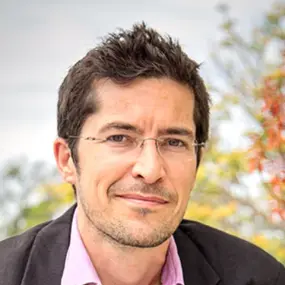
Topher McDougal is an author with a passion for futurism, thinking differently, and finding patterns across different domains and scales. Topher’s research focuses on human-environment interaction, illicit trades (especially in small arms), and the economics of humanitarianism and peace. He is Professor of Economic Development & Peacebuilding at the University of San Diego’s Kroc School of Peace Studies, where he directs the graduate programs in Peace & Justice and Humanitarian Action. He teaches on economic development, environmental peace and justice, humanitarianism, black markets, research methodology and evaluation.